

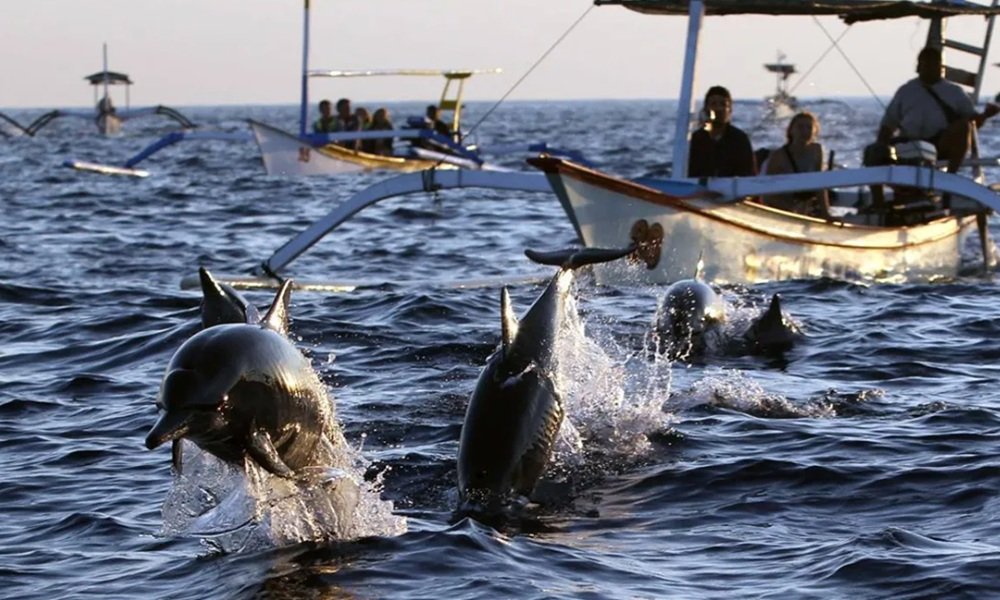
Where to Watch Dolphins in Bali
If you are wondering where to watch dolphins in Bali, the northern coast around Lovina is the destination most travelers consider first. The calm waters, early-morning boat trips, and regular dolphin sightings have made this part of the island one of the most popular places for a dolphin-watching experience. Unlike many Bali attractions that involve long walks, temples, or crowded viewpoints, a morning on the sea offers something completely different: the chance to see wild dolphins moving through their natural environment as the sun rises over the Bali Sea.
The experience is not simply about taking photographs. It is about being on the water adventures before most of Bali has started its day, watching the horizon change color, listening to the sound of the boat, and waiting for a pod to appear. Sometimes dolphins surface close to the boat. At other times, they may be farther away, briefly showing their dorsal fins before disappearing beneath the waves.
Where to Watch Dolphins in Bali: Why Lovina Is the Main Choice
Lovina is a coastal area in North Bali, particularly known for its black-sand beaches and dolphin-watching trips. The coastline stretches across several traditional beach communities, including Kalibukbuk, which is commonly associated with Lovina.
For visitors searching for where to watch dolphins in Bali, Lovina stands out because dolphin trips have become part of the area’s tourism culture. Local boat operators know the surrounding waters and usually leave very early in the morning when the sea is relatively calm.
The boats used for these trips are typically traditional outrigger boats designed for stability. The relatively narrow design allows them to move efficiently across the water while giving passengers an unobstructed view of the sea.
A typical morning begins before sunrise. Depending on your accommodation and the operator you choose, you may travel to the beach while it is still dark. Once you reach the shoreline, you board the boat and head away from the coast.
The sunrise itself becomes part of the attraction.
As daylight increases, the mountains and coastline begin to emerge in the distance. Then comes the exciting moment when passengers start looking for movement across the water.
What Makes Lovina Different From Other Bali Beaches?
Many visitors associate Bali with the beaches of Kuta, Seminyak, Canggu, or Nusa Dua. Those areas are excellent for swimming, surfing, restaurants, and sunsets, but they offer a very different atmosphere from North Bali.
Lovina is quieter and generally more relaxed.
The northern coastline does not have the same urban tourism atmosphere found in southern Bali. There are fewer large beach clubs and less of the intense traffic associated with the island’s busiest tourist areas. That slower atmosphere makes the dolphin experience feel more connected to the surrounding environment.
For travelers researching where to watch dolphins in Bali, this difference is important. The attraction is not a large marine park or an artificial show. The appeal comes from being on the open sea and observing Bali dolphin tour when they happen to pass through the area.
That also means sightings can never be treated as completely guaranteed.
Dolphins are wild animals. Their movements depend on weather, sea conditions, food availability, and their natural behavior.
The Best Part of the Experience Happens Before Sunrise
One of the most memorable aspects of dolphin watching in Lovina is the early start.
You may need to wake up while the sky is still dark. At first, this can seem inconvenient, especially if you are on vacation. However, once the boat leaves the beach, the early departure starts to make sense.
The sea can be beautifully quiet in the morning. The first light gradually appears on the horizon, creating a peaceful atmosphere that is very different from the busy daytime coastline.
Then, as the boat reaches the areas where dolphins may be present, everyone’s attention shifts toward the water.
Passengers often scan the surface for a dorsal fin, a splash, or a sudden movement. When a dolphin appears, the reaction is usually immediate. People point, take photographs, and watch carefully because the animal may disappear again within seconds.
This unpredictability is part of what makes the experience exciting.
What Kind of Dolphins Might You See?
The waters around Bali are home to different marine species, and dolphin encounters can involve more than one type of dolphin depending on location and conditions.
Commonly discussed species in Indonesian waters include spinner dolphins, bottlenose dolphins, and other species that move through tropical marine environments. However, visitors should avoid assuming that every trip will involve a specific species.
The animals may travel in groups of different sizes. Some pods can appear to move together in a coordinated way, while smaller groups may travel separately.
You might see dolphins swimming alongside or near the boat, surfacing repeatedly before moving away. You could also see only brief appearances at a distance.
For anyone researching where to watch dolphins in Bali, this is an important expectation to have: the experience is wildlife observation, not a scheduled performance.
When Should You Go Dolphin Watching?
Timing can make a significant difference to your experience.
Bali Dolphin tour from Lovina traditionally take place in the early morning, often around sunrise. This is when many operators head out onto the water because conditions can be more favorable and dolphin activity may be easier to observe.
However, the best conditions can vary from day to day.
Weather, wind, waves, visibility, and marine activity can all influence what happens during your trip. A calm morning may provide a much more comfortable boat ride and clearer views than a rough day.
If dolphin watching is one of the main reasons for visiting North Bali, consider giving yourself some flexibility rather than scheduling the experience on the final morning of your Bali vacation.
A second opportunity can be useful if weather conditions affect the first trip.
For more detailed seasonal planning, see our guide on the Best Time to See Dolphins in Bali.
How Far Is Lovina From Bali’s Main Tourist Areas?
One factor that travelers sometimes underestimate is the distance between North Bali and the island’s southern tourist areas.
If you are staying in Seminyak, Canggu, Kuta, Jimbaran, Nusa Dua, or Uluwatu, reaching Lovina requires a fairly long road journey. Travel time depends heavily on traffic, road conditions, and your exact starting point.
This is why many visitors choose to stay overnight in North Bali rather than attempting to travel from the south immediately before the dolphin trip.
An overnight stay also makes the experience more relaxed. Instead of driving through the night or leaving extremely early from southern Bali, you can arrive in Lovina the previous afternoon, have dinner, sleep normally, and wake up shortly before the morning excursion.
For travelers determined to find where to watch dolphins in Bali without rushing, this is often the more comfortable approach.
Can You See Dolphins Every Day?
No wildlife encounter can honestly promise that.
Dolphins are not attractions that operate according to a fixed schedule. Even when dolphins are frequently observed in an area, their behavior can change.
One morning may produce several exciting sightings, while another may involve a longer wait or distant animals.
This uncertainty should not necessarily be viewed as a disadvantage. In fact, it is one of the reasons responsible wildlife tourism is different from a staged animal attraction.
The goal should be to observe rather than chase.
If dolphins appear, enjoy the moment. If they remain farther away, appreciate the natural environment and the experience of being on the Bali Sea.
Choosing an experienced local operator can also help because local crews are familiar with the area’s waters and daily conditions.
What Should You Bring?
A dolphin-watching trip does not require complicated equipment, but a few practical items can make your morning much easier.
Bring lightweight clothing that can handle sea spray. A small towel can also be useful, especially if the boat gets splashed.
Sunglasses become helpful once the sun rises, while sunscreen is important even during an early morning trip. The reflection of sunlight from the sea can increase your exposure.
If you want photographs, a smartphone can work well. A waterproof phone pouch is a smart precaution because boats and ocean water are not a good combination for expensive electronics.
A camera with a strong zoom lens can be useful for distant dolphins, although wildlife photography on a moving boat can be challenging.
Most importantly, avoid bringing large bags. Space on traditional boats can be limited, and a smaller day bag is easier to manage.
A Few Simple Tips for a Better Morning
Arrive prepared for an early start.
Try to get enough sleep the night before rather than treating the dolphin trip as an extension of a late night. If you are prone to seasickness, consider preparing accordingly before boarding the boat.
Keep your expectations realistic. You may have seen dramatic dolphin photographs online, but those images often represent a particularly good moment captured by someone who has spent considerable time photographing wildlife.
Your own encounter may be different.
Sometimes the most memorable sighting is not a dolphin jumping dramatically out of the water. It may simply be a small group surfacing together in the distance while the sun rises behind them.
Listen to your boat crew as well. They can explain what you are seeing and help you understand the local conditions.
Is Dolphin Watching Suitable for Families?
For many families, a morning dolphin trip can be an enjoyable Bali activity because it combines wildlife, boating, and sightseeing without requiring a physically demanding hike.
Children often enjoy the excitement of searching the sea for dolphins. The experience can also introduce younger travelers to the idea of observing wildlife in its natural environment.
Parents should, however, consider their children’s comfort with boats and early mornings. Young children who struggle with long journeys or boat movement may need additional preparation.
Life jackets and basic safety procedures should always be taken seriously.
If your family is particularly interested in marine life, you can also combine the trip with other North Bali activities, depending on your schedule and interests.
Responsible Dolphin Watching Matters
The popularity of dolphin trips means that responsible tourism is increasingly important.
Wild dolphins should be treated as wildlife rather than performers. Boats should avoid aggressive pursuit, excessive crowding, or behavior that unnecessarily disturbs the animals.
When several boats are in the same area, patience becomes especially important. Everyone wants the closest view, but rushing toward dolphins can create stress for the animals and make the experience less enjoyable for everyone.
Travelers can contribute by choosing operators that demonstrate respect for marine life and follow sensible boating practices.
Avoid attempting to touch or feed wild dolphins. Do not throw food into the water to attract them, and never encourage behavior that puts the animals or passengers at risk.
A good wildlife encounter should leave you with a memorable experience without negatively affecting the animals you came to see.
Is Lovina Worth Visiting Just for Dolphins?
If dolphins are high on your Bali wish list, Lovina can absolutely be worth adding to your itinerary.
But there is another reason to visit.
North Bali provides a different perspective on the island. The landscape, villages, coastline, waterfalls, temples, and slower pace create an atmosphere that contrasts with the highly developed southern tourist areas.
That means you do not have to view the trip as simply a few hours spent looking for dolphins.
You can turn it into a North Bali experience.
Stay overnight, enjoy the local coastline, explore nearby attractions, and start your next morning with a boat trip. This approach gives you more time to enjoy the region instead of spending much of the day traveling between the south and north.
For travelers comparing where to watch dolphins in Bali, the broader experience of visiting Lovina is one of its strongest advantages.
Planning Your Dolphin Adventure in Bali
The simplest way to plan a dolphin-watching experience is to decide first whether you want a dedicated morning activity or part of a larger North Bali itinerary.
If you are already staying in Lovina, the arrangement is relatively straightforward. If you are staying elsewhere, consider transportation and travel time carefully.
It is also wise to check the weather and sea conditions before departure. A flexible schedule gives you a better chance of enjoying the experience without feeling pressured.
Most importantly, remember why you are going.
You are not simply looking for a photograph of a dolphin. You are visiting a part of Bali where the ocean, local communities, traditional boats, and marine wildlife come together in one experience.
For anyone asking where to watch dolphins in Bali, Lovina remains the most recognizable choice because it combines accessible dolphin excursions with the peaceful character of North Bali.
The early alarm may be worth it when the horizon begins to glow, the boat slows down, and a group of dolphins suddenly surfaces in the morning sea.
That moment can last only a few seconds.
But it can become one of the memories you remember long after your Bali vacation is over.
Read our related Guide: Best Time to See Dolphins in Bali