

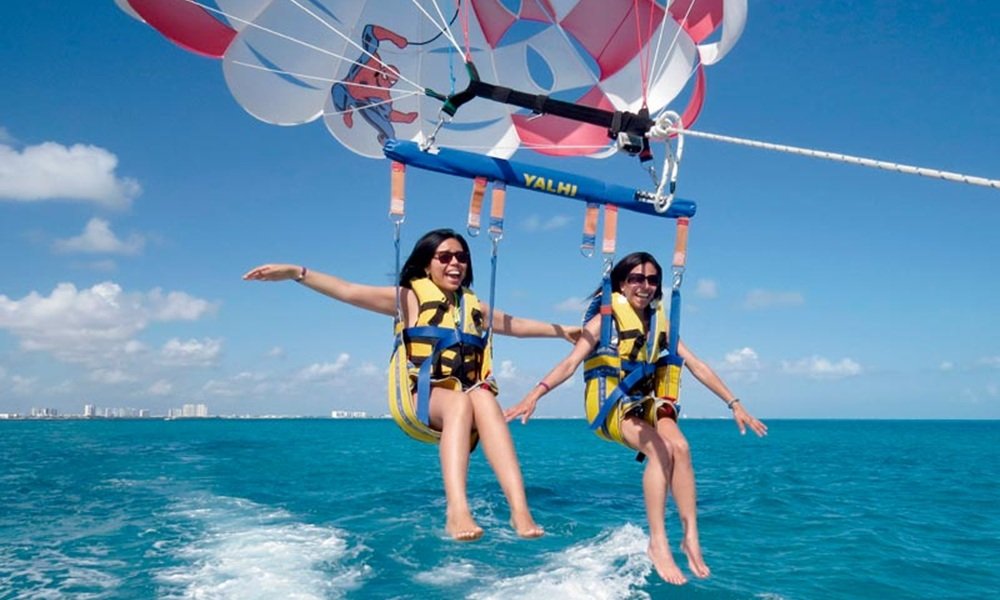
Is Bali Parasailing Safe?
Is Bali parasailing safe? For most healthy travelers, parasailing can be a safe and enjoyable water adventures when it is operated by a responsible provider, suitable equipment is used, and weather and sea conditions are carefully assessed before takeoff. Unlike activities that require you to control a parachute yourself, recreational parasailing in Bali is generally guided by a trained crew who manages the boat, tow system, and launch and landing procedures.
Still, “safe” does not mean completely risk-free. Parasailing involves being lifted above the water while connected to a moving boat, so several factors matter. Wind, waves, equipment condition, crew experience, passenger weight, and following instructions can all affect the experience.
For visitors planning a Bali adventure, understanding these factors before booking is one of the easiest ways to make the experience more comfortable and enjoyable.
What Makes Parasailing Different From Other Water Sports?
One reason many first-time visitors are surprised by Bali parasailing adventure is how little physical effort is actually required.
You do not normally steer the parasail. Instead, the canopy is connected to a towline, while a boat provides the pulling force. The crew controls the operation and communicates with the passenger during preparation, takeoff, flight, and landing.
In popular Bali watersport areas such as Tanjung Benoa, parasailing is commonly conducted using a boat-based system. The participant is attached to a harness, and the crew manages the ascent and descent. Some operators use a winch system that allows the passenger to be lifted from and returned toward the boat rather than requiring a traditional beach launch.
That makes the activity accessible to people who may not consider themselves particularly athletic.
The biggest challenge for many beginners is psychological rather than physical. Looking down at the sea from above can feel intimidating during the first few seconds. Once the parasail is fully airborne and the movement becomes steady, however, many people find the experience surprisingly relaxing.
Is Bali Parasailing Safe for First-Time Travelers?
For beginners, the most important consideration is not whether you have previous parasailing experience. You generally do not need it.
What matters much more is choosing an operator that takes preparation seriously.
A professional crew should explain how the harness works, where you should sit or position yourself, what signals you need to understand, and what to do during landing. You should never feel pressured to take off before you understand the instructions.
Weather assessment is another essential part of the process. Local parasailing operators describe checking wind direction, wind strength, sea conditions, and weather before allowing flights to proceed.
This is important because parasailing depends heavily on wind. A calm, suitable day can produce a smooth flight, while changing or excessive wind can make the operation more difficult.
If an operator decides to postpone a flight because conditions are unsuitable, that should be viewed as a positive safety decision—not a disappointment.
The Weather Is More Important Than Your Courage
A common mistake is thinking that the main requirement for parasailing is simply being brave enough to go high above the ocean.
In reality, courage cannot compensate for poor weather.
Wind is particularly important because the parasail canopy needs airflow to remain stable. Strong or rapidly changing winds can increase the difficulty of controlling the flight. Heavy rain, thunderstorms, rough seas, or other unfavorable conditions may also result in a delay or cancellation.
This is why the same activity can feel completely different from one day to another.
A responsible operator should assess conditions before launching and continue monitoring them during operations. If conditions deteriorate, flights should be stopped or delayed.
For travelers, this means flexibility is useful. Avoid planning parasailing as an activity that absolutely must happen at one particular minute of your vacation. Giving yourself some room to reschedule can make your trip much easier.
Morning or earlier daytime periods are often attractive for watersports because conditions can be more favorable, but there is no universal “perfect hour.” The actual weather and sea conditions on the day are more important than simply following a fixed schedule.
Safety Equipment You Should Expect
The equipment may look simple from the beach, but several components work together during a parasailing flight.
The harness is one of the most important pieces because it connects your body securely to the parasail system. A properly fitted harness should feel firm without causing unnecessary discomfort.
A life jacket is also an important part of the equipment. Local Bali parasailing guidance specifically describes life jackets as part of the standard safety preparation.
Depending on the operator and setup, additional protective equipment or accessories may also be used.
Before getting airborne, take a moment to check that the equipment feels properly secured. If something feels loose, uncomfortable, damaged, or unclear, tell the crew immediately.
You do not need to be an expert in parasailing equipment. Simply asking questions is enough.
A good rule is straightforward: if you are uncomfortable with something, speak up before takeoff rather than waiting until you are in the air.
Your Weight and Physical Condition Matter
Parasailing is not suitable for everyone under every circumstance.
Operators may have minimum or maximum age and weight requirements, and these can vary depending on the equipment, passenger combination, wind conditions, and operator policy. For tandem flights, the combined weight of two passengers may be particularly important. Some Bali operators publish specific combined-weight limits while noting that conditions can affect whether a flight is possible.
This is why you should provide accurate information when booking.
Do not assume that because you meet an advertised weight limit, you will automatically fly in every weather condition. The final decision may depend on the conditions on the day.
Physical comfort is also worth considering. If you have an injury, mobility limitation, or another condition that could make getting into position difficult, discuss it with the operator before participating.
The crew should be able to tell you whether the activity is appropriate based on their operating requirements.
Follow the Crew’s Instructions Exactly
Once you are on the boat, this is not the time to experiment.
The crew has a specific procedure for connecting the harness, preparing the parasail, launching, and bringing you back down. Follow their instructions even if you have watched parasailing videos online or have tried the activity somewhere else.
This is especially important during takeoff and landing.
Some Bali operators use specific hand coverings or signals to help passengers follow landing instructions. Their procedures can differ, so do not assume that instructions from another operator or another country apply to your flight.
Listen carefully to the briefing before the boat begins moving.
If you cannot hear the crew clearly because of wind or engine noise, tell them. It is better to ask them to repeat an instruction than to guess what you are supposed to do.
What Happens During a Typical Bali Parasailing Flight?
Although procedures vary between operators, the experience generally begins on the boat.
The crew prepares the parasail and checks the passenger’s harness and safety equipment. After the appropriate preparations, the boat begins moving and the parasail gradually rises.
The first few moments can feel dramatic because you suddenly gain altitude.
Then something interesting happens: the experience often becomes much quieter than expected.
Once you are properly airborne, you are mainly enjoying the view. Depending on the location and conditions, you may see the coastline, beaches, boats, and clear tropical water below you.
There is no need to perform tricks or make unnecessary movements.
Simply remain relaxed and follow the crew’s instructions.
The return to the boat or landing area is handled by the operator. In some boat-based systems, a winch helps control the ascent and descent, which can make the procedure more gradual.
The exact duration and flight procedure vary, so ask your chosen operator what is included before booking.
What Can Make Parasailing Less Safe?
There are several warning signs that should make you reconsider an activity.
The first is poor weather.
If there are strong winds, thunderstorms, heavy rain, or rough sea conditions, waiting is usually the sensible choice.
The second is poorly maintained equipment. Harnesses, towlines, connectors, boats, and parasails should appear properly maintained and appropriate for the activity.
The third is inadequate briefing.
If the crew rushes you through preparation and does not explain what you need to know, you should be comfortable asking questions before proceeding.
Another concern is pressure to fly despite conditions that appear unsuitable. You are allowed to say no. A reputable operator should respect a passenger’s decision to postpone or cancel because of safety concerns.
Finally, be cautious about choosing purely on price. The cheapest activity is not necessarily the best value if important safety procedures are unclear.
How to Choose a Safer Parasailing Operator in Bali
Before booking, look beyond photographs and promotional prices.
Check whether the operator clearly explains its safety procedures. Look for information about equipment, weather policies, age and weight requirements, and what happens if conditions become unsuitable.
Customer reviews can also provide useful clues. Do not focus exclusively on comments about beautiful views or friendly staff. Look for reviews mentioning punctuality, equipment condition, communication, organization, and how the crew handled safety.
It is also reasonable to ask a few simple questions before paying:
- What happens if the weather becomes unsuitable?
- What safety equipment is provided?
- Are there age or weight restrictions?
- Is the flight solo or tandem?
- How does takeoff and landing work?
- What happens if I become uncomfortable during the activity?
- Is transportation included in the package?
A professional operator should be able to answer these questions clearly.
What Should You Wear for Parasailing?
Comfortable beach clothing is usually the practical choice.
Avoid unnecessary loose accessories that could become inconvenient during the activity. Sunglasses, hats, jewelry, and other personal items should be secured appropriately or left somewhere safe if the operator recommends it.
Because parasailing takes place above the ocean, assume that there is always some possibility of getting wet.
Sunscreen is also worth applying before the activity. At altitude, you are exposed to direct sunlight as well as reflected light from the water.
Wear footwear that is easy to manage around the boat and follow the operator’s instructions about what should be removed before the flight.
The goal is simple: nothing should distract you while the crew is preparing or launching you.
Should You Be Scared of the Height?
A little nervousness is completely normal.
In fact, many first-time passengers are more frightened while sitting on the boat waiting for takeoff than once they are actually airborne.
The anticipation gives your imagination plenty of opportunities to create worst-case scenarios.
Once you are in the air, however, the sensation can be surprisingly smooth. There is usually no need to control anything yourself, and the wide view of the coastline can quickly become the main focus.
If you are nervous, tell the crew.
Do not try to hide your fear by acting overly confident. Experienced staff deal with nervous beginners regularly and can explain what will happen before you take off.
Take slow breaths, listen to instructions, and concentrate on the scenery rather than constantly looking at the equipment.
When Should You Skip Parasailing?
There are situations when the best answer is simply not to fly.
Consider postponing the activity if weather conditions are unfavorable, if the operator advises against flying, or if you feel physically unwell.
You should also reconsider if you have been drinking alcohol before the activity. Water activities require attention, balance, communication, and the ability to respond to instructions. Being impaired can make an otherwise manageable activity more dangerous.
Do not let friends pressure you into participating if you are genuinely uncomfortable.
An adventure is supposed to be enjoyable. There is no prize for forcing yourself onto a parasail when you do not feel ready.
You can always try another day.
Is Bali Parasailing Worth Trying?
For travelers who want an aerial view of Bali without learning to operate a paraglider or completing a demanding physical activity, parasailing can be an excellent choice.
It combines a relatively short activity with a memorable view of the coastline. You do not need extensive training, and the crew handles the technical side of the experience.
The key is to understand that safety is a shared responsibility.
The operator is responsible for appropriate equipment, competent crew, weather assessment, and proper procedures. You are responsible for providing accurate information, listening to instructions, using the required safety equipment, and speaking up if something does not feel right.
When both sides do their part, Bali parasailing adventure can be an exciting addition to a Bali vacation without turning the experience into unnecessary stress.
Final Thoughts on Bali Parasailing Safety
So, is Bali parasailing safe? It can be, provided you choose a reputable operator and the activity is conducted under suitable weather and sea conditions.
There is no adventure activity that is completely free of risk. What matters is how those risks are identified and managed.
Before booking, investigate the operator rather than choosing only by price. Ask about equipment, weather procedures, passenger restrictions, and the launch and landing process. On the day of your activity, pay attention to the briefing and follow every instruction from the crew.
Most importantly, never feel pressured to fly when conditions appear unsuitable.
With sensible preparation, the right operator, and a cooperative attitude, your first parasailing experience in Bali can be less about worrying and much more about enjoying the spectacular view from above the ocean.
If you are preparing for your first experience, continue with our First-Time Guide to Bali Parasailing for practical preparation tips before your adventure.