

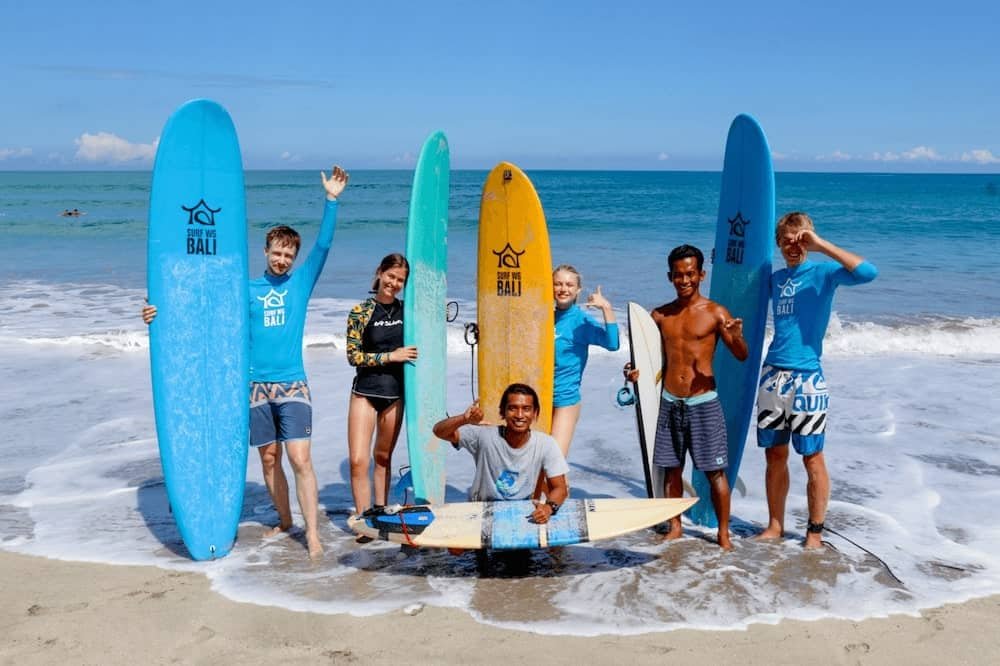
Best Beaches for Surf Lessons in Bali
Finding the Best Beaches for Surf Lessons in Bali can make your first Bali experiences on a surfboard much easier and more enjoyable. Bali is one of the world’s most popular surfing destinations, but not every beach offers the same conditions for learning. Some beaches have gentle waves and sandy bottoms that are well suited to beginners, while others are better for experienced surfers who already understand how to handle stronger breaks.
For a first lesson, the goal is not necessarily to find the biggest waves. A good beginner beach should offer manageable waves, suitable water conditions, enough space to practice, and instructors who can explain surfing techniques clearly.
Bali has several excellent areas for learning, from the famous beaches of southern Bali to quieter locations where beginners can enjoy a more relaxed atmosphere. Choosing the right beach can have a major impact on your confidence during those first few hours in the water.
What Makes a Good Beach for Learning to Surf?
Before choosing a location, it helps to understand what makes a beach suitable for beginners.
The ideal learning environment usually has waves that are powerful enough to push a beginner’s board forward but not so strong that controlling the board becomes difficult.
A sandy bottom can also be preferable for beginners because falling is part of learning. Surf schools generally select training areas based on current conditions, wave size, tides, and safety considerations.
Another important factor is space.
A crowded surf break can make learning stressful. Beginners need room to practice paddling, standing up, turning, and controlling their boards without constantly worrying about other surfers.
Finally, an experienced instructor matters just as much as the beach itself.
Even a beginner-friendly location can become challenging if you are unfamiliar with ocean conditions.
Best Beaches for Surf Lessons in Bali: Kuta Beach
Kuta Beach is one of the most recognizable places to Bali surf lessons.
Its long sandy coastline and generally approachable waves have made it a popular starting point for first-time surfers for decades.
One of Kuta’s biggest advantages is the large number of surf schools and instructors operating in the area.
This makes it relatively easy to arrange a lesson.
The beach also has a convenient location for travelers staying in Kuta, Legian, Seminyak, and surrounding areas.
Beginners can typically start with basic techniques on the sand before entering the water.
Instructors teach how to position yourself on the board, paddle correctly, identify suitable waves, and stand up safely.
Kuta can become busy, particularly during popular travel periods, so choosing an appropriate time for your lesson can improve the experience.
Legian Beach for a Relaxed Learning Experience
Legian Beach is located between Kuta and Seminyak and offers another option for beginner surfers.
The beach has a long stretch of sand, making it possible to find suitable areas for lessons depending on daily conditions.
Its location is convenient for tourists staying in the surrounding areas.
Legian can also feel slightly different from the busiest sections of Kuta.
For beginners, having enough space to practice is important.
Your first lesson will probably involve plenty of mistakes.
You may fall repeatedly before successfully standing on the board.
That is completely normal.
A suitable beach allows you to learn these basic movements without feeling pressured to perform immediately.
Seminyak Beach
Seminyak is famous for restaurants, cafés, beach clubs, and sunsets, but it can also be used as a starting point for surfing.
Surf conditions vary depending on the exact section of beach, tide, and swell.
For beginners, professional instruction is particularly important because conditions can change throughout the day.
If you are staying in Seminyak, taking a lesson nearby can be convenient because you do not have to spend additional time traveling across Bali.
One advantage of learning in this area is the variety of facilities available nearby.
After your lesson, you can easily find somewhere to eat, relax, or continue exploring.
Jimbaran Beach
Jimbaran is another location worth considering for travelers looking for a more relaxed coastal environment.
The area is better known for its beautiful bay and seafood restaurants than for aggressive surf breaks.
That can be useful for beginners because conditions in protected areas may be more manageable depending on the day.
However, surfing conditions are never guaranteed.
An instructor should assess the ocean before taking beginners into the water.
Jimbaran can also be convenient for travelers staying near the airport or in southern Bali.
If you want to combine a surf lesson with other activities in the area, it can fit naturally into a broader itinerary.
Sanur Beach
Sanur is often associated with calm waters, sunrise views, and family-friendly coastal activities.
Because the reef and coastline influence the waves differently from the west coast, surfing conditions can be more limited for traditional beginner lessons.
However, Sanur can be suitable for certain water activities and may occasionally offer surf opportunities depending on conditions.
If surfing is your primary goal, ask a local instructor about current conditions before choosing Sanur over the more established beginner beaches on Bali’s southern and western coastline.
For travelers staying in Sanur, a local surf school can advise whether conditions are suitable on the day you want to learn.
Canggu and Batu Bolong
Canggu has become one of Bali’s best-known surfing areas.
Batu Bolong is particularly popular with beginner and intermediate surfers because the area has a strong surf culture and many instructors.
The beach is surrounded by cafés, restaurants, accommodation, and other tourist facilities, making it convenient for visitors who want a full day around the coast.
However, Canggu can become extremely busy.
Beginners should not assume that a famous surfing beach is automatically the easiest place to learn.
Crowded lineups require greater awareness.
A qualified instructor can select an appropriate section of the beach and teach you how to enter and exit the water safely.
If you are staying in Canggu, taking a lesson early in the day may help you enjoy less crowded conditions.
Echo Beach
Echo Beach is another well-known surf destination around Canggu.
It is generally more associated with intermediate and experienced surfers than complete beginners.
For someone taking their first lesson, conditions can be more challenging depending on the swell and tide.
That does not mean beginners can never surf there.
It simply means that your instructor should determine whether the conditions are appropriate.
If you have already completed several lessons and want to progress beyond the most basic waves, Echo Beach may become more interesting.
Why Beginners Should Not Chase Big Waves
One of the most common mistakes new surfers make is thinking bigger waves automatically mean a better surfing experience.
For learning, the opposite can often be true.
Large or powerful waves can make paddling, timing, standing, and board control significantly more difficult.
A smaller wave that allows you to stand successfully can be far more valuable than a powerful wave that immediately knocks you over.
Your first goal should be learning the fundamentals.
Once you become comfortable with the board, you can gradually progress to stronger waves under appropriate supervision.
Choosing the Right Time for Your Lesson
Timing can influence your surfing experience.
Conditions vary throughout the day depending on tides, wind, and swell.
Many surf schools recommend particular times based on the day’s conditions rather than following one universal schedule.
Morning lessons can be appealing because wind conditions may sometimes be more favorable.
However, the best time depends on the beach and the day’s forecast.
Do not assume that an early lesson is always better.
Ask your instructor when conditions are expected to be most suitable for your ability level.
What Happens During a Beginner Surf Lesson?
A typical beginner lesson starts on land.
Your instructor will introduce the surfboard and explain basic safety.
You may practice lying on the board, paddling, positioning your feet, and performing the standing movement on the sand.
This preparation is important.
Trying to learn everything for the first time in moving water can be overwhelming.
Once you understand the basic technique, you will enter the water with your instructor.
The first objective is usually catching small waves and learning to stand.
Do not worry if it takes several attempts.
Falling is part of the process.
How Long Does It Take to Learn?
There is no universal timeline.
Some people stand on their first Bali surf lessons.
Others need several sessions before they feel comfortable.
Your progress depends on balance, fitness, previous board-sport experience, confidence, ocean awareness, and the conditions on the day.
Do not compare yourself with experienced surfers.
Someone who has surfed for years may make difficult maneuvers look effortless.
Your first goal is simply to understand the board and become comfortable in the water.
With regular practice, your balance and timing should gradually improve.
Private or Group Surf Lessons?
Both options have advantages.
Group lessons are often more affordable and can be enjoyable if you like learning alongside other travelers.
Private lessons provide more individual attention.
If you are nervous about surfing or have never participated in a board sport before, private instruction can be particularly useful.
Your instructor can focus entirely on your technique and adjust the lesson to your pace.
Families may also prefer private instruction because children and adults can have very different confidence levels.
When choosing a surf school, consider the instructor’s experience, safety practices, equipment, group size, and recent customer feedback rather than focusing only on price.
What Should You Wear?
Surfing requires practical clothing.
A swimsuit or comfortable swimwear is usually suitable.
Many surf schools provide rash guards, which can protect your skin from the board and sun.
A rash guard can also reduce irritation when you spend a long time paddling.
Avoid loose accessories that could fall into the ocean.
Remove jewelry before entering the water.
Secure long hair if necessary.
Your instructor can explain what equipment is provided and what you need to bring.
Surfboard Size Matters
Beginner boards are generally larger and more stable than advanced shortboards.
This is intentional.
A larger board makes it easier to maintain balance while learning the basic standing technique.
Do not feel embarrassed about using a large beginner board.
Experienced surfers may use much smaller boards because they already have the balance and skills needed to control them.
Your instructor should recommend a board appropriate for your height, weight, experience, and current conditions.
Using the right equipment can make your first lesson much more enjoyable.
Safety Should Come Before Progress
Surfing is an exciting activity, but the ocean deserves respect.
Always listen to your instructor.
Learn how to fall safely.
Understand where you should enter and exit the water.
Be aware of other surfers.
Never paddle into an area that your instructor has identified as unsuitable.
Do not attempt waves that exceed your ability simply because someone else is surfing them.
Ocean conditions can change quickly.
A responsible surf school will prioritize your safety over getting you onto the biggest possible wave.
Protect Your Skin
A surf lesson can expose you to the sun for an extended period.
Apply water-resistant sunscreen before entering the water and reapply according to the product instructions, especially after swimming.
A rash guard can provide additional coverage.
A surfboard leash can also prevent the board from drifting away when you fall.
Your instructor should explain how to use the equipment correctly.
Remember that the combination of sunlight and reflected light from the ocean can increase your exposure.
What If You Are Not Fit?
You do not need to be a professional athlete to try surfing.
However, surfing does require physical effort.
Paddling can be tiring, particularly for someone who is not accustomed to it.
Your first session may leave your shoulders and arms feeling tired.
Take breaks when needed.
Tell your instructor if you are struggling.
A good lesson should be adjusted to your ability rather than forcing you to continue beyond your comfort level.
Surfing With Children
Bali is a popular destination for families, and children can learn to surf when conditions, equipment, age, and supervision are appropriate.
The most important factor is choosing a qualified instructor who regularly works with children.
A child should feel comfortable in the water before attempting to surf.
The instructor should also select appropriate waves and equipment.
Do not pressure a child to stand on the first attempt.
Enjoying the water and building confidence are more important than immediate success.
When Should Experienced Beginners Move to Harder Beaches?
Once you have completed several beginner sessions, you may want to try stronger waves.
This should happen gradually.
A beach that was too challenging during your first lesson may become appropriate after you develop better paddling skills and understand wave behavior.
Ask your instructor for advice.
Local knowledge is extremely valuable because conditions can change dramatically between beaches and even between different sections of the same coastline.
Progress should be based on skill rather than impatience.
Comparing Bali’s Surfing Areas
For a first lesson, western and southern beaches are often the most practical choices because they have established surf schools and a range of conditions.
Kuta and Legian are convenient for beginners.
Seminyak can be useful for travelers staying in that area.
Batu Bolong in Canggu has a strong surf culture and many instructors but can be crowded.
Jimbaran can provide a different atmosphere, while Sanur may be more appropriate for other water activities depending on conditions.
The best beach for you is ultimately the one where the day’s conditions match your ability level.
The Best Beaches for Surf Lessons in Bali are not necessarily the beaches with the biggest waves or the most famous surf breaks.
For beginners, the ideal location is one that provides manageable conditions, appropriate equipment, experienced instructors, and enough space to learn comfortably.
Kuta and Legian remain popular choices because of their long sandy beaches and established surf schools. Canggu’s Batu Bolong offers a lively surf environment, while Seminyak provides convenience for travelers staying nearby. Other locations such as Jimbaran and Sanur may also be worth considering depending on daily conditions and your instructor’s recommendations.
Your first surfing experience should be about learning, not proving how brave you are.
Start with suitable waves, listen to your instructor, use the right equipment, and give yourself permission to fall. Every experienced surfer once had a first lesson.
With the right beach and a good instructor, even complete beginners can experience the excitement of standing on a surfboard and riding their first wave in Bali.
If you are planning more island adventures after your surf lesson, discover Best Things to Do in Gili Trawangan in One Day for ideas on snorkeling, cycling, beaches, food, and island exploration.