

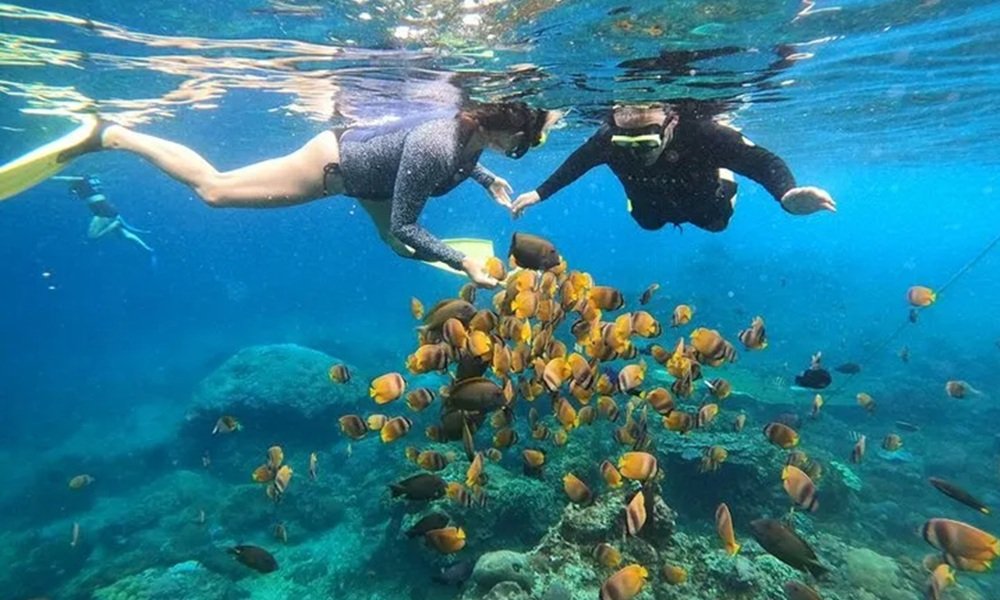
Best Time for Nusa Penida Snorkeling
Choosing the Best Time for Nusa Penida Snorkeling can make a noticeable difference to your experience in the water adventures. Clearer visibility, calmer seas, lighter winds, and comfortable weather can make it easier to enjoy coral reefs and marine life. However, there is no single date on the calendar when conditions are guaranteed to be perfect.
Nusa Penida is surrounded by open ocean, so conditions can change with the season and from one day to another. Even during a generally favorable month, wind, waves, currents, tides, and visibility can influence whether a particular snorkeling location is suitable.
The smartest approach is therefore to understand the seasonal pattern while remaining flexible about the actual day of your trip.
Best Time for Nusa Penida Snorkeling: The Dry Season
For many travelers, the dry season is the most convenient period for Nusa Penida snorkeling tour.
Bali’s dry season generally runs from around April through October, although weather patterns do not follow exact calendar dates.
During the drier months, travelers often experience less rainfall and more stable weather compared with the wet season.
This can create better opportunities for boat trips and outdoor activities.
June, July, August, and September are particularly popular months for visitors.
However, popularity does not automatically mean every day will have perfect snorkeling conditions.
Wind can still affect the sea.
Cloud cover can change.
Currents can vary.
Visibility may differ between locations.
Therefore, even when traveling during the dry season, the conditions on the actual day remain more important than simply knowing the month.
April and May: A Transitional Period
April and May can be interesting months for travelers who want to avoid the busiest part of the high season.
These months sit around the transition from wetter conditions toward the drier period.
Rainfall patterns may become less persistent, while outdoor conditions can gradually become more favorable.
For snorkeling, this can be useful because fewer rainy days may provide more opportunities for boat trips.
The advantage of traveling during a transition period is that you may experience a combination of reasonable weather and fewer crowds than during the busiest vacation periods.
However, weather can still be less predictable than during the heart of the dry season.
If you plan a snorkeling trip during April or May, keep some flexibility in your schedule.
Having an extra day available can be useful if weather conditions affect your preferred departure.
June: A Good Balance
June is often a comfortable month for visitors who want to explore Bali before the peak of the July and August holiday period.
The weather is generally becoming drier, while the island can feel somewhat less crowded than during the busiest months.
For snorkeling, the combination of relatively stable weather and fewer peak-season crowds can make June attractive.
Boat operators may also have more flexibility compared with the busiest holiday periods.
Still, do not assume that every snorkeling location will have identical conditions.
Nusa Penida has a varied coastline.
One bay may have calmer water while another exposed area experiences stronger movement.
Local operators can often determine which location is most appropriate for the conditions.
July and August: Popular but Busy
July and August are among the busiest travel months in Bali.
They are also popular for outdoor activities because they generally fall within the drier period.
For travelers focused on snorkeling, these months can provide good opportunities for boat trips, especially when the sea is calm.
The downside is demand.
Popular snorkeling locations can become busy, especially around well-known destinations.
If you prefer a quieter experience, consider traveling earlier in the morning or choosing an itinerary that includes less crowded areas.
Another consideration is accommodation and transportation availability.
Hotels, fast boats, and tours can be more heavily booked during peak travel periods.
Planning ahead becomes more important.
September and October: Another Good Option
September can be an attractive alternative to July and August.
The weather remains relatively favorable in many years, while some of the peak-season crowds begin to decrease.
October can also provide good snorkeling opportunities, although it moves closer to the transition toward the wetter season.
For travelers who dislike crowded destinations, September can offer an appealing balance between weather and visitor numbers.
October requires slightly more flexibility because rainfall and changing weather patterns can become more relevant.
Again, the actual forecast and sea conditions should guide the decision.
November to March: The Wet Season
The wet season generally brings more rainfall to Bali.
That does not mean snorkeling is impossible.
Nusa Penida can still experience sunny periods during the wet season, and weather can change quickly.
A rainy morning does not necessarily mean the entire day will be lost.
The bigger concern is the combination of rain, wind, waves, and reduced visibility.
Heavy rainfall or stronger winds can affect boat operations and underwater conditions.
For this reason, travelers visiting between November and March should build more flexibility into their itinerary.
If snorkeling is one of the main reasons for your trip, avoid scheduling it on your final available day.
Give yourself another opportunity in case weather forces a change.
Does Rain Mean You Cannot Snorkel?
Not necessarily.
Light rain does not automatically make snorkeling unsafe or unpleasant.
In fact, you may still have excellent conditions shortly after a brief shower.
What matters more is the overall marine environment.
Strong wind and waves can be more important than rainfall itself.
Heavy rain may also affect visibility if runoff enters coastal waters.
Therefore, do not make your decision based only on whether rain appears in the forecast.
Look at the broader picture.
Wind speed, wave conditions, sea state, visibility, and the operator’s local assessment all matter.
Why Wind Matters So Much
Wind is one of the most important factors affecting a snorkeling trip.
Even if the sky is blue and there is no rain, strong wind can create uncomfortable water conditions.
Waves may increase.
The boat journey can become rougher.
Surface movement can make snorkeling more tiring.
Visibility can also be affected.
For beginners especially, calm water can make the experience significantly more enjoyable.
This is why local operators may change the itinerary even when the weather looks perfectly fine from the beach.
They are considering the water, not simply the sky.
Visibility Is Not the Same Every Day
Clear water is one of the main attractions of snorkeling around Nusa Penida.
But underwater visibility changes naturally.
Several factors can affect it, including:
- Wind
- Waves
- Rainfall
- Currents
- Plankton
- Tides
- Local water movement
You may have excellent visibility at one location and poorer visibility a short distance away.
This is another reason why flexible itineraries are valuable.
If conditions at one location are disappointing, another nearby area may provide a much better experience.
There is no need to become frustrated simply because one spot is not as clear as expected.
How Tides Affect Snorkeling
Tides can influence water movement, access, and conditions around coastal areas.
The effect varies by location.
Some snorkeling areas may become more comfortable during certain tidal periods, while others can experience stronger movement.
A local operator familiar with the area can use tide information when planning the day’s route.
Visitors do not necessarily need to memorize tide charts.
Instead, ask your operator how the day’s tide is expected to affect the itinerary.
This is particularly useful if you are unfamiliar with Nusa Penida’s coastline.
Is Morning Better Than Afternoon?
Morning departures are often popular for snorkeling.
There are several practical reasons.
The sea may be calmer on some days, visibility can sometimes be favorable, and an early departure gives you more time to adjust the itinerary if conditions change.
Morning also tends to be cooler than the middle of the day.
However, there is no universal rule that snorkeling in the morning will always be better.
Conditions depend on weather, tides, wind, currents, and location.
A good operator should choose the departure time based on local conditions rather than simply claiming that one time is always perfect.
Why Early Starts Can Help Avoid Crowds
There is another reason to consider an early snorkeling trip: visitor numbers.
Popular Nusa Penida locations can become busy when multiple boats arrive around the same period.
Starting earlier can give you a better chance of experiencing the water before the busiest part of the day.
This does not guarantee an empty snorkeling location.
Nusa Penida is a popular destination.
But reducing the amount of time spent around large groups can make the experience feel more relaxed.
For underwater photography, this can also be beneficial because fewer swimmers may appear in the background.
Does the Month Affect Marine Life?
Seasonal changes can influence marine life, but not every species follows the same pattern.
Manta rays, reef fish, turtles, and other animals have different behaviors and habitat preferences.
One important distinction is between manta rays and mola mola.
Manta rays can be encountered around Nusa Penida throughout the year, while mola mola sightings are more strongly associated with the cooler period, particularly around July through October.
If marine wildlife is your primary reason for visiting, it is worth researching the specific animal you hope to see rather than assuming all marine life follows one seasonal schedule.
And remember that wild animals are never guaranteed.
The Manta Ray Question
Many travelers choose Nusa Penida because they hope to see manta rays.
The good news is that manta encounters can occur throughout the year.
However, weather and water conditions still influence whether a trip can reach the appropriate location and whether visibility is good enough for an enjoyable encounter.
If you are planning a manta-focused trip, do not think only about the season.
Think about the entire combination:
weather + sea conditions + visibility + location + operator experience.
That combination matters more than a specific month on the calendar.
What About Mola Mola?
Mola mola, also known as ocean sunfish, is one of Nusa Penida’s most famous marine animals.
Unlike manta rays, mola mola are strongly associated with the cooler-water season.
July through October is commonly regarded as the main period when divers have opportunities to encounter them around Nusa Penida.
However, sightings remain unpredictable.
Mola mola are wild animals and can move between different depths.
For snorkelers, they are generally much less predictable than reef fish or even manta rays.
If seeing mola mola is your main goal, diving may provide better opportunities than ordinary snorkeling.
Weekdays vs. Weekends
The day of the week can also influence your experience.
Weekends and public holidays can attract more visitors.
If you have flexibility, a weekday snorkeling trip may provide a more relaxed atmosphere.
There is no guarantee that a weekday will be quiet, particularly during peak travel season.
But reducing your exposure to the busiest travel periods can help.
This is especially useful for travelers who prefer smaller groups or quieter snorkeling sessions.
Peak Season vs. Shoulder Season
Peak season has advantages.
Transportation options are plentiful.
Tour operators are busy.
Accommodation choices remain available if booked in advance.
Weather can also be favorable.
But there are disadvantages.
Popular sites may be crowded.
Prices may be higher.
Boats can become busy.
Shoulder-season travel can offer a different balance.
April, May, September, and parts of October may appeal to travelers who want fewer crowds while still having reasonable opportunities for good weather.
The trade-off is greater weather uncertainty during transitional periods.
What If the Weather Changes After Booking?
This is something every traveler should consider.
A snorkeling tour may be booked several days or weeks in advance, but the actual weather forecast becomes more useful closer to the trip.
If conditions become unsuitable, your operator may change the route, reschedule the activity, or recommend another option.
Before booking, understand the cancellation and rescheduling policy.
Ask what happens if the operator cancels because of weather.
A clear policy can prevent confusion later.
Avoid choosing a provider based only on a low advertised price.
The way a company handles weather-related changes is part of the value of the service.
Give Yourself a Backup Day
If snorkeling is one of the highlights of your Nusa Penida trip, consider keeping a spare day available.
This is especially useful during periods when weather can be unpredictable.
For example, if you are staying for three days, you do not necessarily need to schedule snorkeling on the final morning.
A flexible itinerary allows you to move the activity if conditions are poor.
This small planning decision can greatly increase your chances of experiencing good water conditions.
How Long Should You Stay in Nusa Penida?
A day trip can work for travelers with limited time, but staying overnight provides greater flexibility.
With an overnight stay, you have more opportunities to choose the best weather window.
You are also less dependent on matching mainland Bali transportation with the snorkeling schedule.
A longer stay can be particularly useful if snorkeling is a major priority.
Instead of trying to force the activity into one specific day, you can choose the most suitable available conditions.
Is the Dry Season Always Better?
Not necessarily.
The dry season generally provides favorable weather for outdoor activities, but individual days can still experience wind and rough seas.
Likewise, the wet season can occasionally produce beautiful calm days.
This is why saying “dry season is good” is not enough.
The best approach is:
- Understand the seasonal pattern.
- Check the forecast.
- Ask the local operator.
- Keep some flexibility.
- Let actual sea conditions determine the final decision.
This method is more reliable than depending on a fixed calendar rule.
What Should You Check Before Your Trip?
A few days before snorkeling, check:
Weather: Is rain expected?
Wind: Are winds expected to be strong?
Waves: Is the sea likely to be comfortable for your ability?
Visibility: Are underwater conditions expected to be clear?
Tides: Could tidal movement affect the chosen location?
Boat operations: Is the route operating normally?
You do not need to become a marine meteorologist.
Your local operator can interpret the conditions.
Your job is simply to ask questions and remain flexible.
Choosing the Right Time for Beginners
Beginners should prioritize calm conditions over everything else.
A slightly less famous snorkeling location with comfortable water can be a much better choice than an iconic location with strong currents.
This is especially important for people who have never snorkeled in open water.
If you are nervous, tell your guide.
A professional operator can help select a more appropriate location.
The goal of your first experience should be confidence and enjoyment.
You can always try more challenging conditions after gaining experience.
The Best Time Depends on Your Priorities
Different travelers have different definitions of the “best” time.
A photographer may prioritize visibility and soft morning light.
A family may prioritize calm water.
A wildlife enthusiast may have a particular animal in mind.
A budget traveler may prefer shoulder-season prices.
A traveler who dislikes crowds may choose a weekday outside peak season.
Therefore, the best time is not one universal answer.
It depends on what you value most.
A Simple Seasonal Guide
As a general planning reference:
April–May: Transition toward drier conditions; potentially good balance between weather and crowds.
June: Generally favorable and before the busiest peak period.
July–August: Popular dry-season months with strong demand and potentially good conditions.
September: Often an attractive balance between weather and fewer peak-season crowds.
October: Still potentially favorable but increasingly transitional.
November–March: Wetter period with greater weather variability and potentially more challenging sea conditions.
These are broad seasonal patterns, not guarantees.
Actual conditions can vary from year to year.
What Is the Best Month Overall?
If you want one practical answer, September is an attractive option for many travelers.
It can offer a useful combination of generally favorable dry-season weather and fewer peak-season crowds compared with July and August.
June is another strong choice.
July and August can also be excellent for snorkeling, but they tend to be busier.
Still, if your travel dates are fixed, do not worry about missing a “perfect” month.
A good snorkeling day can happen outside the traditionally recommended periods.
The Best Day Is More Important Than the Best Month
This may be the most important point in planning.
A calm day in November can be better than a windy day in August.
A clear morning can be better than a cloudy afternoon.
A sheltered snorkeling location can be better than an exposed site with poor conditions.
The month gives you a general expectation.
The day determines your actual experience.
That is why local weather knowledge and itinerary flexibility matter so much.
Plan Around the Ocean, Not Against It
Nusa Penida’s underwater environment is beautiful precisely because it is a natural environment.
It cannot be controlled.
There will be days when conditions are excellent.
There will be days when the ocean does not cooperate.
A responsible traveler accepts this.
If your operator recommends changing the snorkeling location, listen.
If the sea becomes unsuitable, do not insist on following the original itinerary.
The best adventure is one where you return to shore safely and with good memories.
Before You Book Your Tour
Once you have selected your preferred travel period, look carefully at the tour details.
Check the departure time, itinerary, transportation, equipment, guide services, and weather policy.
Understanding the package beforehand will make the actual travel day much smoother.
For a detailed explanation of the services and facilities that may be part of your package, read our guide to What Is Included in a Nusa Penida Snorkeling Tour?.
This can help you compare packages based on actual value rather than headline price.
Finding the Best Time for Nusa Penida Snorkeling tour is not simply a matter of choosing one month and assuming the conditions will be perfect.
The dry season, particularly June through September, is generally attractive because of more favorable weather patterns. September can be an especially appealing choice for travelers who want a balance between conditions and crowd levels.
But seasonal averages are only part of the story.
Wind, waves, visibility, currents, tides, and rainfall can change the quality of a snorkeling trip on any particular day.
For this reason, flexibility is more valuable than chasing a perfect date.
Choose a good travel period, then check the actual conditions.
Listen to your local operator.
Consider an early departure.
Avoid scheduling your snorkeling adventure on the final possible day of your trip.
And if conditions are not suitable, be willing to change the plan.
The ocean does not follow a calendar.
The best snorkeling experience happens when the timing, weather, sea conditions, location, and your own comfort level come together.
Plan intelligently, remain flexible, and let Nusa Penida’s underwater world determine what the day has in store.
The dry season from roughly April to October is generally the most popular period for Nusa Penida snorkeling, with June through September offering favorable opportunities. September can provide a good balance between weather and crowds, while the wet season requires more flexibility. Ultimately, the actual sea conditions on your chosen day matter more than any specific month.