

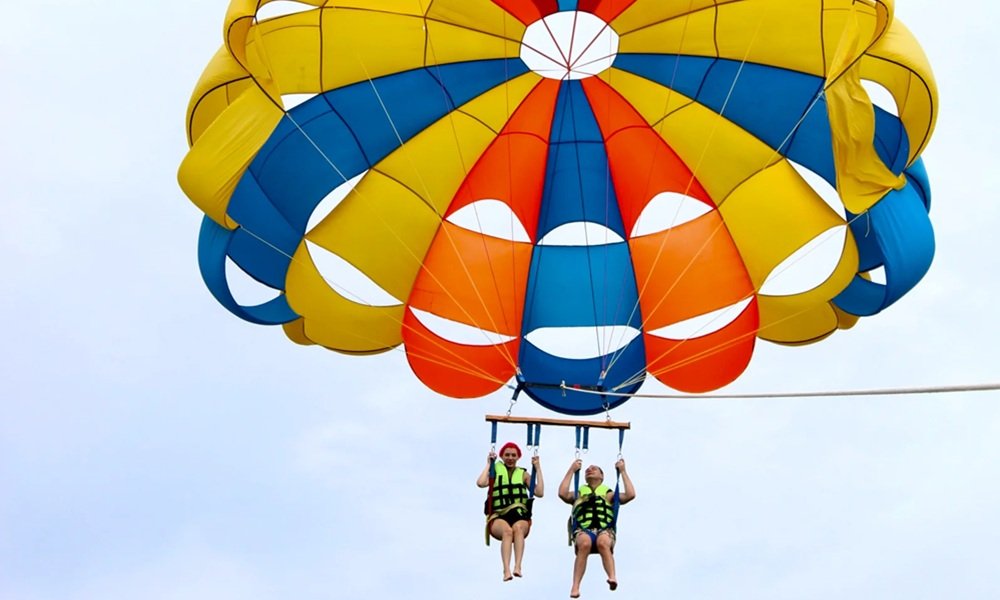
What to Wear for Parasailing
Knowing what to wear for parasailing can make a surprisingly big difference to your comfort during a Bali water adventures. Although parasailing does not require complicated clothing or specialized gear, the combination of tropical heat, ocean water, wind, sunlight, and safety equipment means that choosing the right outfit is worth a little thought before you leave your hotel.
You do not need to dress like a professional athlete.
In fact, the best outfit is usually simple, comfortable, lightweight, and suitable for getting wet.
Your clothing should allow you to move easily while the crew prepares your harness, remain comfortable while you are above the water, and dry reasonably quickly afterward. Small details such as footwear, sunglasses, jewelry, and loose accessories can also affect your experience.
If this is your first Bali parasailing adventure the following guide will help you decide what to pack and what to leave behind.
What to Wear for Parasailing in Bali
For most travelers, swimwear combined with a lightweight shirt or rash guard is an excellent starting point.
A swimsuit, swim trunks, or comfortable beach shorts work well because there is always a possibility of getting splashed. Even when you remain mostly dry during the flight, boarding the boat and moving around the watersports area can expose you to water.
A lightweight rash guard can be particularly useful in Bali’s strong tropical sunlight. It provides additional coverage without making you feel excessively warm.
For women, a secure swimsuit or athletic-style swimwear is generally more practical than loose beach clothing. For men, swim trunks or quick-drying shorts are usually convenient.
The key is to choose clothing that stays comfortably in place.
Avoid anything that requires constant adjustment.
Once you are preparing for takeoff, you want your attention on the crew’s instructions rather than worrying about your clothes.
Choose Quick-Drying Materials
Fabric choice matters more than fashion when preparing for parasailing.
Cotton may feel comfortable when dry, but it absorbs water and can become heavy. If you get splashed, a cotton T-shirt may remain wet for a long time.
Synthetic materials such as polyester and nylon are generally more practical for watersports because they tend to dry faster.
A quick-drying shirt can also be useful after the activity. You may still have other plans for the day, and wearing wet clothing for several hours can quickly become uncomfortable.
This is particularly useful when parasailing is only one part of a larger Bali itinerary.
You might have lunch afterward, visit another attraction, or travel to a different beach. Quick-drying clothing helps you transition from the water activity to the rest of your day without carrying around a completely soaked outfit.
Should You Wear a Swimsuit?
Yes, a swimsuit is one of the simplest choices.
A swimsuit gives you freedom of movement and is designed to handle water. It is especially convenient if you plan to combine parasailing with swimming or other watersports.
However, you do not necessarily have to wear a swimsuit.
If you prefer more coverage, lightweight athletic shorts and a quick-drying T-shirt can work well.
The most important consideration is comfort.
Remember that a harness will be positioned around your body during the activity. Clothing that is excessively bulky can make the harness less comfortable.
Very loose clothing can also move around in the wind.
A secure, relatively close-fitting outfit is generally more practical.
A Rash Guard Can Be a Smart Choice
A rash guard is one of the most useful pieces of clothing for a Bali watersports day.
It provides protection from direct sunlight while remaining lightweight and flexible.
This matters because parasailing can expose you to sunlight from several directions.
You have direct sunlight from above and reflected sunlight from the ocean surface. Even when a breeze makes the air feel comfortable, the sun can still be strong.
A long-sleeve rash guard can be particularly useful for travelers who burn easily or prefer to minimize direct sun exposure.
It is also comfortable when wet and generally dries much faster than ordinary cotton clothing.
For a full day of Bali watersports, a rash guard can be more useful than a fashionable beach shirt.
What About Shoes?
Footwear is one area where travelers often overthink the situation.
You generally do not need heavy footwear for the actual parasailing flight.
Depending on the operator and boat setup, you may be asked to remove your shoes before participating. This is normal around many watersports activities.
For getting to and from the beach or boat, lightweight sandals or water shoes can be practical.
Water shoes are particularly useful if you expect to walk through shallow water or across a surface that may be uncomfortable under bare feet.
However, avoid bringing expensive footwear that you do not want exposed to saltwater or sand.
A simple pair of beach sandals is usually enough for most travelers.
Before entering the boat, simply follow the crew’s instructions regarding footwear.
Can You Wear Sunglasses?
Sunglasses can be useful in Bali, but you need to think about how securely they fit.
The sunlight reflecting off the ocean can be intense, and sunglasses can make the experience more comfortable.
The problem is that loose sunglasses can easily become a liability when you are exposed to wind several meters above the water.
A pair with a secure fit or a suitable retaining strap can be more practical.
Do not rely on expensive designer sunglasses unless you are confident they are secure.
Losing them in the ocean would be an unpleasant souvenir.
If the operator recommends removing sunglasses or other loose items before takeoff, follow that instruction.
What About Hats and Caps?
A hat may seem like an obvious way to protect yourself from the Bali sun, but it is not always practical during parasailing.
Wind becomes an important factor once you are airborne.
A loose cap can easily fly away.
A wide-brimmed beach hat can be even more difficult to manage.
For this reason, many travelers are better off using sunscreen and a secure rash guard rather than relying on a hat during the actual flight.
You can wear your hat before and after the activity, then store it safely when preparing to fly.
If you have a very secure athletic cap, ask the crew whether it is acceptable before takeoff.
Never assume an accessory is safe simply because it feels secure while standing on the beach.
Leave Loose Jewelry Behind
Jewelry is best kept off the parasail.
Necklaces, large earrings, bracelets, watches, and rings can become inconvenient while wearing a harness.
There is also the obvious risk of losing something valuable in the ocean.
Saltwater, sunscreen, sand, and repeated exposure to water are not ideal for many types of jewelry.
More importantly, jewelry should not interfere with safety equipment.
A simple rule is easy to remember:
If you would be upset to lose it in the ocean, do not take it on the parasailing flight.
Leave valuable items securely at your accommodation or in a designated storage area provided by the operator.
Should You Wear a Watch?
A waterproof sports watch may technically be suitable for water activities, but you probably do not need it.
Parasailing is not an activity where you need to monitor your heart rate, distance, or speed.
A watch can also become uncomfortable underneath or around the harness depending on its design.
If you are using a smartwatch to track your activity, consider whether it is genuinely necessary.
For most people, the simplest approach is better.
Leave unnecessary electronics and accessories safely stored and enjoy the experience without worrying about them.
Sunscreen Is More Important Than You Think
Clothing is only one part of sun protection.
Apply sunscreen before heading out for your parasailing session, especially on areas that will remain exposed.
Your face, ears, neck, shoulders, arms, and legs may all receive substantial sunlight.
Water can reflect sunlight, and the breeze created by the boat can make the temperature feel cooler than it actually is.
That can create a false sense of security.
You may feel comfortable while your skin is still receiving significant sun exposure.
Choose a sunscreen appropriate for water activities and reapply it according to the product instructions.
If you are planning several outdoor activities throughout the day, do not assume that applying sunscreen once in the morning is enough.
What Should You Wear if You Are Nervous About the Harness?
Comfort becomes especially important for first-time passengers.
A harness needs to fit securely around your body, so avoid wearing thick layers underneath it.
Bulky jackets, heavy sweatshirts, or multiple loose shirts are unnecessary in Bali’s tropical climate anyway.
A swimsuit, rash guard, or lightweight shirt is generally more practical.
If you are concerned about the harness, tell the crew before takeoff.
They can explain where it will sit and help you make sure your clothing is positioned comfortably.
Do not try to adjust safety parasailing equipment yourself once the crew has secured it.
If something feels uncomfortable or incorrectly positioned, simply tell them.
What If You Are Parasailing With Children?
Children’s clothing should be practical and secure.
Swimwear, lightweight shorts, and rash guards are usually better choices than loose beach outfits.
A rash guard can be particularly helpful because children may spend considerable time outdoors before and after the activity.
Parents should also bring an extra change of clothes.
Children are often more likely to get wet while moving around the beach or boat, even if the parasailing flight itself is relatively dry.
Before booking, confirm the operator’s current age, height, and weight requirements.
Clothing should never be the only consideration when determining whether a child is suitable for the activity.
What Should You Bring in Your Beach Bag?
A small beach bag can make the day much easier.
Consider bringing:
- A spare shirt
- Extra swimwear
- Towel
- Sunscreen
- Sunglasses with a secure strap
- Water bottle
- Lightweight sandals
- Waterproof bag for wet clothes
- Small amount of cash if needed
- Personal identification if the operator requires it
You do not need to bring your entire travel bag.
In fact, bringing fewer belongings is often better.
Watersports areas can become crowded, and you do not want to spend the activity worrying about expensive electronics or valuables.
A simple waterproof pouch can be useful for small personal items, but always follow the operator’s instructions about where belongings should be stored.
What Not to Wear for Parasailing
Knowing what to avoid can be just as useful as knowing what to wear.
Avoid heavy clothing.
A thick hoodie or sweatshirt is unnecessary in Bali and can become uncomfortable if wet.
Avoid loose scarves and similar accessories.
Avoid clothing with complicated straps, excessive metal decorations, or anything that could interfere with the harness.
Avoid expensive jewelry.
Avoid unsecured hats.
Avoid ordinary shoes that you do not want exposed to water.
Also think twice about wearing your favorite white clothing.
Ocean water, sunscreen, sand, and boat surfaces can create stains that are difficult to remove.
Parasailing is an adventure, not a fashion photoshoot.
Choose practicality first.
What to Wear Before and After the Activity
If parasailing is only one part of your day, you do not necessarily have to arrive wearing your swimwear.
You can travel from your hotel in normal lightweight clothing and change at the Bali watersports facility if suitable changing facilities are available.
This can be particularly convenient if you plan to continue sightseeing afterward.
Pack a clean outfit in a small waterproof bag.
After the activity, change out of wet clothing as soon as practical.
This is especially helpful if you have a long drive ahead.
A dry T-shirt and shorts can make the journey back to your hotel much more comfortable.
If you are staying near the beach, the process becomes even easier.
What About Women With Long Hair?
Long hair is not a reason to avoid parasailing, but it is worth preparing for wind.
A simple hair tie can help keep your hair manageable.
Avoid complicated hairstyles that become uncomfortable underneath equipment.
A ponytail or braid can be practical, depending on where the harness sits.
Bring an extra hair tie in your beach bag.
The wind can be much stronger above the water than it feels while standing on the beach.
You may also want to bring a small comb or brush for afterward if you are planning photographs or going directly to lunch.
Should You Wear Makeup?
You can, but keep it practical.
Heavy makeup may not be ideal for a watersports day because heat, sweat, sunscreen, and water can affect it.
If photography is important, lightweight or water-resistant products may be more convenient.
However, avoid allowing cosmetics to become a distraction during the activity.
Your priority should be comfort.
The Bali parasailing adventure experience itself provides a spectacular background, so you do not need elaborate preparation to get memorable photographs.
What to Wear on a Cloudy Day
Do not assume that cloudy weather means you can ignore sun protection.
Tropical sunlight can still reach exposed skin when clouds are present.
A rash guard, sunscreen, and comfortable beach clothing remain useful.
Cloudy conditions can also make the air feel cooler, especially when you are moving through the wind.
However, Bali is generally warm enough that heavy clothing is rarely necessary for parasailing.
If conditions are genuinely unsuitable for the activity, the operator may postpone the flight.
Your clothing choice should not be based on trying to compensate for unsafe weather.
What to Wear During a Full Watersports Day
If parasailing is part of a larger watersports package, clothing becomes even more important.
You may move from one activity to another, and some activities can involve considerably more water than parasailing.
A practical outfit might include swimwear, a rash guard, water-friendly footwear, sunscreen, and a dry change of clothes.
Avoid wearing anything you cannot afford to get wet.
A waterproof bag for your phone, wallet, and other personal belongings can also be useful.
The simpler your outfit, the easier it is to transition between activities.
A Simple Outfit Formula
If you do not want to overthink your clothing, use this simple combination:
Swimwear + rash guard + sunscreen + secure sunglasses + lightweight sandals + dry change of clothes.
That is enough for most travelers.
You do not need specialized parasailing clothing.
You do not need expensive equipment.
You simply need clothing that is comfortable, secure, water-friendly, and appropriate for Bali’s tropical environment.
Choosing what to wear for parasailing is much easier once you understand what the activity actually involves.
The ideal outfit is lightweight, comfortable, secure, and capable of getting wet. Swimwear, quick-drying shorts, and a rash guard are practical choices for most travelers. Footwear should be simple, while loose accessories, valuable jewelry, and unsecured hats are better left behind.
Remember that comfort is more important than appearance.
You may spend only a relatively short time in the air, but you will also be moving around a boat, dealing with equipment, sunlight, wind, and potentially water before and after your flight.
Pack a spare outfit, protect your skin from the sun, secure anything you bring with you, and listen to the crew’s instructions regarding clothing and personal belongings.
With a little preparation, you can spend less time worrying about what you are wearing and more time enjoying the view of Bali from above the ocean.
For travelers comparing different watersports before booking their adventure, continue with our guide Parasailing vs Jet Ski in Bali to see which experience better matches your travel style.