

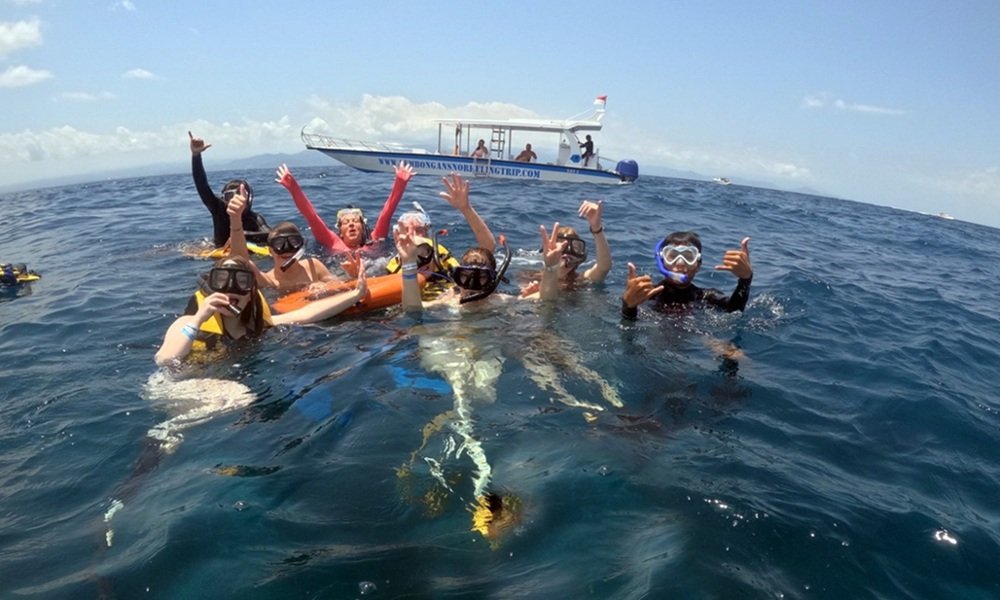
Nusa Penida Snorkeling Tour for Beginners
A Nusa Penida Snorkeling Tour for Beginners can be an exciting way to discover Bali’s underwater world without needing previous snorkeling experience. Nusa Penida is surrounded by clear tropical waters, coral reefs, colorful fish, sea turtles, and famous marine wildlife. For someone visiting the island for the first time, however, the experience can also feel unfamiliar.
You may be wondering how the tour works, whether you need to be a strong swimmer, what happens when you arrive at the snorkeling locations, and how much time you actually spend in the water.
The good news is that snorkeling does not have to be complicated.
With the right itinerary, suitable equipment, local guidance, and realistic expectations, beginners can enjoy an unforgettable day around Nusa Penida’s coastline.
What Makes Nusa Penida Good for Beginners?
Nusa Penida offers something that many first-time snorkelers appreciate: variety.
You are not limited to one type of underwater environment. Depending on the itinerary and conditions, you can experience coral gardens, shallow reef areas, tropical fish, and the possibility of seeing larger marine animals.
The island also has a well-developed network of local boat operators and snorkeling providers, making it relatively easy to arrange a day on the water.
However, “beginner-friendly” does not mean that every snorkeling location is easy in every condition.
Ocean conditions can change quickly.
Some areas may have stronger currents or more exposed water, while another nearby location may be calmer on the same day.
That is why beginners should choose an itinerary based on current conditions rather than simply selecting the most famous location.
How a Typical Tour Begins
Most snorkeling adventures begin with transportation to a coastal departure point.
Depending on your travel arrangements, you may arrive in Nusa Penida from Bali by fast boat or already be staying on the island.
After reaching the departure area, your operator will normally organize the boat, snorkeling equipment, and itinerary.
This is when you should communicate any concerns.
If you are a beginner, say so.
If you are not a confident swimmer, say so.
If you have never used a snorkel before, there is no reason to hide it.
A good local crew can give you more appropriate guidance when they understand your experience level.
The boat journey itself can become part of the water adventures. Nusa Penida’s dramatic coastline looks very different from the water, with cliffs, bays, rocky formations, and beaches appearing from a completely different perspective.
Your First Time Using Snorkeling Equipment
The basic equipment is simple.
You will normally use a mask, snorkel, and fins. Depending on the operator and conditions, flotation equipment may also be available.
The mask allows you to see underwater, while the snorkel lets you breathe with your face in the water.
Fins help you move more efficiently.
For beginners, the most important thing is getting comfortable before swimming far from the boat.
Put on the equipment and take a moment to check how everything feels.
If your mask leaks, ask for help.
If your fins are uncomfortable, ask whether another size is available.
Do not wait until you are already far from the boat to discover that something does not fit properly.
You Do Not Need to Swim Like a Professional
One of the most common concerns among first-time snorkelers is swimming ability.
You do not need to be an expert swimmer to enjoy snorkeling, but you should be honest about your abilities.
If you are comfortable in the water but not a strong swimmer, flotation equipment can provide additional confidence.
If you become tired, tell your guide.
There is no competition.
Snorkeling is supposed to be enjoyable.
Trying to keep up with experienced swimmers can cause unnecessary fatigue and make you less comfortable.
A beginner should move at a relaxed pace and stay within the area recommended by the guide.
Getting Used to Breathing Through a Snorkel
Breathing through a snorkel is one of the strangest sensations during your first few minutes.
You are used to breathing through your nose and mouth naturally. With a snorkel, you must breathe through your mouth while keeping your face in the water.
The easiest way to adapt is to slow down.
Take calm breaths.
Do not try to swim immediately.
If possible, practice while floating in a controlled area before moving farther away.
Once your breathing becomes natural, the experience changes.
You no longer need to think about every breath, and you can concentrate on what is happening below you.
This is usually the point when first-time snorkelers begin to relax.
What You Will See Underwater
The underwater environment around Nusa Penida snorkeling tour area can be surprisingly colorful.
You may see schools of small reef fish moving between coral formations, individual brightly colored fish, sea turtles, and different types of marine life depending on the location.
The experience is not necessarily about seeing the largest animal.
Look carefully at the reef.
Small creatures often hide between coral formations or move quickly through the water.
Take your time.
Instead of swimming continuously from one place to another, occasionally stop and look around.
The longer you stay still, the more likely you are to notice small details.
A Beginner’s Itinerary Should Not Be Too Ambitious
There is a temptation to visit as many locations as possible in one day.
For a first-time snorkeler, that is not always the best approach.
Spending less time traveling between locations and more time comfortably enjoying the water can create a much better experience.
A beginner-friendly itinerary might include two or three snorkeling locations depending on sea conditions, travel time, and the operator’s schedule.
If conditions change, the route may be adjusted.
That is normal.
The ocean determines the itinerary more than a printed schedule does.
A responsible operator should be willing to change locations if another area provides safer or more suitable conditions.
What About Manta Rays?
Manta rays are one of the biggest attractions associated with Nusa Penida.
Many first-time visitors arrive hoping to see one.
And yes, manta rays can sometimes be encountered while snorkeling.
However, they are wild animals.
There is no guarantee that a particular traveler will see one during a particular trip.
This is important to understand before booking a tour.
If you see a manta, enjoy the moment without trying to chase it.
If you do not see one, the day can still be excellent.
Nusa Penida has much more to offer than one particular animal.
For a detailed explanation of manta encounters, read Can You See Manta Rays in Nusa Penida?
That article explains where manta encounters occur, why the animals visit certain areas, and what you can realistically expect.
Choosing a Tour Based on Conditions
Beginners should not choose a snorkeling tour based only on the number of locations advertised.
A three-location itinerary is not automatically better than a two-location trip.
What matters is whether the locations are appropriate for the conditions on that particular day.
Wind, waves, currents, visibility, and tides can all influence the experience.
A local operator with good knowledge of the area can decide whether a particular location is suitable.
If the original itinerary changes because conditions are unfavorable, that should generally be seen as responsible decision-making rather than a problem.
The ocean does not follow a fixed tourist schedule.
Boat Transfers Are Part of the Experience
A boat-based snorkeling trip involves more than simply getting into the water.
You may spend time traveling between locations, boarding and leaving the boat, waiting for other members of the group, and moving equipment.
For first-time visitors, this can be part of the adventure.
Listen carefully when the crew explains where to sit and how to enter the water.
Be particularly careful when boarding or leaving the boat because wet surfaces can become slippery.
Keep personal belongings secured.
If you bring a phone or camera, use appropriate waterproof protection.
What Should Beginners Bring?
Your snorkeling operator will normally provide the main equipment, but you still need several personal items.
A practical day bag should include:
- Swimwear
- Towel
- Sunscreen
- Drinking water
- Sunglasses
- Dry clothes
- Waterproof phone pouch
- Personal medication
- Small amount of cash
- Lightweight footwear
A rash guard can also be useful for additional sun protection.
Avoid bringing unnecessary valuables.
The less you carry onto a boat, the easier it is to keep track of everything.
Don’t Forget Sun Protection
The tropical sun can be stronger than it feels when you are surrounded by water.
You may spend much of the day focused on snorkeling and not realize how much sun your shoulders, back, neck, and face are receiving.
Use suitable sun protection and reapply as necessary.
A rash guard can reduce the amount of exposed skin and provide additional protection.
A hat and sunglasses are also useful when you are traveling between snorkeling locations.
Remember that sun protection is not only about avoiding discomfort.
Sunburn can make the rest of your vacation significantly less enjoyable.
Beginners Should Stay Near the Guide
This is one of the simplest rules for enjoying an unfamiliar snorkeling destination.
Stay within the area designated by your guide.
Do not swim far away because you see something interesting.
Do not attempt to explore another part of the reef alone.
The guide understands the location and can recognize conditions that may not be obvious to a visitor.
If you become separated from the group, stop and look for the guide rather than continuing farther away.
Communication is also important.
If you are tired, uncomfortable, nervous, or having trouble with your equipment, let someone know immediately.
What If You Feel Nervous?
Feeling nervous is completely normal.
The ocean can look very different when you are floating above it compared with standing safely on the beach.
The water may appear deeper than expected.
Small waves can make you feel unstable.
You may also feel strange when you first look down and see the reef below you.
Do not force yourself to become comfortable immediately.
Take a few slow breaths.
Stay close to the boat or guide.
Give yourself time.
Most beginners become more relaxed after several minutes in the water.
And if you still do not feel comfortable, it is okay to stop.
There is no requirement to spend the entire trip in the water.
Why Going Slowly Works
Experienced snorkelers sometimes move surprisingly slowly.
That is not because they are tired.
It is because slow movement makes observation easier.
Fast swimming creates unnecessary fatigue and can disturb marine life.
A relaxed pace also makes it easier to control your position and breathing.
For beginners, slow movement has another advantage: it gives you time to learn.
You can observe how your fins work, how your body floats, and how the water moves around you.
After a while, your movements become more natural.
Respect the Reef From the Beginning
Your first snorkeling experience is also an opportunity to develop good ocean habits.
Never stand on coral.
Do not grab marine animals.
Do not chase turtles or manta rays.
Do not remove shells or other marine objects.
Avoid touching anything simply because you want a better photograph.
Coral reefs are living ecosystems.
Even accidental contact can cause damage.
The easiest rule is simple:
Look, but do not touch.
You can enjoy the reef without physically interacting with it.
Taking Photos as a Beginner
It is tempting to spend the entire Nusa Penida snorkeling tour trying to capture the perfect underwater photograph.
Do not let the camera become your main focus.
If you bring an action camera, learn how it works before entering the water.
Make sure it is securely attached.
When something interesting appears, take a few photographs and then look at it directly.
A camera cannot reproduce the feeling of seeing a large turtle or a colorful school of fish moving beneath you.
Sometimes the best memory is the one you experience without looking through a screen.
What Happens When the Snorkeling Session Ends?
After finishing a snorkeling session, you will normally return to the boat.
Depending on the itinerary, you may travel to another location or head back toward the departure point.
This is a good time to drink water, rest, and check whether you need to change or adjust your equipment.
Do not underestimate how tiring several snorkeling sessions can be.
Even when the activity feels relaxed, your body is still swimming and adjusting to the movement of the ocean.
If you feel tired, take a break.
You do not need to enter every location simply because it is included in the itinerary.
Can Families Join?
Families can enjoy snorkeling around Nusa Penida, but children require additional consideration.
Children should be comfortable enough in the water to follow instructions.
Appropriate flotation equipment may provide additional support.
Parents should stay close to younger children rather than assuming that the guide can provide one-on-one supervision throughout the entire activity.
Children may also become tired more quickly than adults.
A shorter and more relaxed snorkeling session can be better than trying to complete an ambitious itinerary.
The objective is to create a positive first experience rather than push children beyond their comfort level.
Is Nusa Penida Suitable for Older Travelers?
Older travelers can also enjoy snorkeling, provided the activity matches their physical ability and comfort in the water.
The most important considerations are access, boat movement, swimming ability, and overall energy levels.
A private or smaller-group trip may be more comfortable for travelers who prefer a slower pace.
If climbing into a boat or walking over uneven surfaces is difficult, discuss this with the operator before booking.
Good planning can make a significant difference.
When Should Beginners Visit?
Nusa Penida can be visited throughout the year, but weather and sea conditions influence the snorkeling experience.
Periods of relatively stable weather can offer better opportunities for calm water and good visibility.
However, conditions can change from day to day.
Instead of choosing a tour solely because it is advertised for a particular month, check the expected conditions around your travel date.
If you have flexibility, allowing your operator to recommend the best available day can be useful.
The goal is not to find a magical date.
It is to find a suitable combination of weather, sea conditions, location, and experience level.
A Beginner Does Not Need to See Everything
This may be the most useful advice for your first snorkeling trip.
Do not try to see everything.
You do not need to visit every famous location.
You do not need to swim the longest distance.
You do not need to see manta rays, turtles, and every colorful fish on the same day.
Instead, focus on enjoying the experience.
Notice the moment when you become comfortable breathing through the snorkel.
Notice the first time you see a fish directly beneath you.
Notice how different the reef looks as sunlight moves through the water.
Those small moments often become the memories you take home.
Choosing the Right Tour Operator
The operator you choose can have a major influence on your experience.
Look for a company that clearly explains what is included, provides appropriate equipment, communicates the itinerary, and takes sea conditions seriously.
For beginners, good communication is particularly important.
You should feel comfortable telling the crew that you are inexperienced.
A professional guide should never make you feel embarrassed about needing help.
Responsible operators also understand that safety comes before completing a predetermined route.
If conditions are unsuitable, they should be prepared to modify the itinerary.
Your First Nusa Penida Snorkeling Day
Imagine arriving at the coast in the morning.
The boat is ready.
Your equipment is prepared.
You receive a short briefing and begin traveling along the island’s coastline.
The cliffs slowly disappear behind you.
The color of the water changes as you reach the snorkeling area.
You put on your mask and fins.
At first, you are nervous.
Then you put your face underwater.
A completely different world appears.
Fish move through the coral.
The sunlight creates patterns across the reef.
Your breathing becomes slower.
After a few minutes, you realize you are no longer thinking about the equipment.
You are simply watching.
That is the moment a first snorkeling experience becomes an adventure.
A Nusa Penida Snorkeling Tour for Beginners does not need to be complicated or intimidating.
The key is choosing an itinerary that matches your ability, listening to local guidance, accepting that ocean conditions can change, and giving yourself time to become comfortable in the water.
You do not need advanced snorkeling skills.
You do not need expensive equipment.
And you do not need to see every famous marine animal.
What you need is an open mind, sensible preparation, and respect for the ocean.
Nusa Penida offers an extraordinary setting for a first snorkeling adventure. Its reefs, tropical fish, turtles, dramatic coastline, and possibility of manta encounters create plenty of opportunities for discovery.
Let the day unfold naturally.
Swim slowly.
Look carefully.
Listen to your guide.
And remember that the ocean is not a theme park. Every encounter is different, and that unpredictability is what makes the experience authentic.
For a first-time visitor, the best snorkeling tour is not necessarily the one with the longest itinerary.
It is the one that leaves you feeling comfortable, excited, and eager to explore the underwater world again.
A beginner snorkeling tour in Nusa Penida should focus on suitable locations, comfortable equipment, realistic expectations, local guidance, and a relaxed pace. You do not need advanced swimming skills, but you should be honest about your ability and communicate with your guide throughout the trip.
For travelers interested in the possibility of seeing one of Nusa Penida’s most famous marine animals, read Can You See Manta Rays in Nusa Penida?