

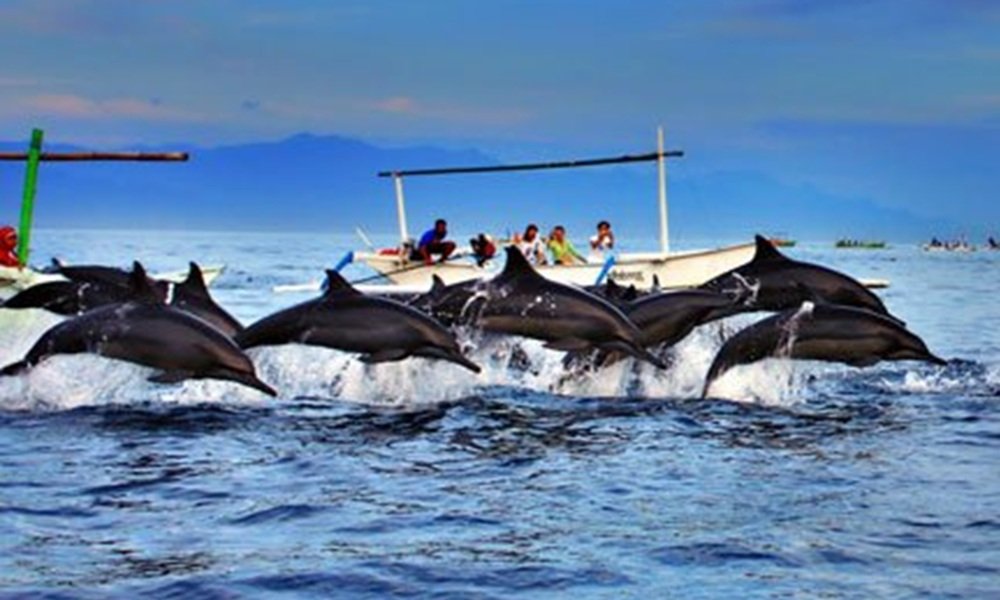
Best Time to See Dolphins in Bali
Planning a dolphin-watching experience can be one of the most exciting things to add to a Bali itinerary, but choosing the Best Time to See Dolphins in Bali can make a significant difference to your experience. Bali’s waters are home to several species of dolphins, and sightings are influenced by weather, sea conditions, time of day, location, and natural animal behavior.
Unlike visiting a zoo or aquarium, Bali takes place in the animals’ natural environment. This means nobody can guarantee exactly how many Bali dolphins tour you will see or how close they will come to the boat. Some mornings may produce spectacular encounters with large groups, while other trips may involve a longer search.
The good news is that dolphin-watching trips are available throughout much of the year. The key is understanding how Bali’s seasons and daily ocean conditions affect the experience.
For many travelers, an early-morning trip from northern Bali offers one of the most memorable opportunities to see dolphins in the open sea.
Best Time to See Dolphins in Bali During the Year
Dolphins can be encountered in Bali’s waters throughout the year, so there is no single month that guarantees the best sightings.
However, the dry season is often attractive for travelers because weather conditions can be more favorable for outdoor activities. Bali’s dry season generally runs from around April through October, although weather patterns can vary from year to year.
During periods of calmer weather, boat journeys may feel more comfortable and visibility can sometimes be better.
The wet season, generally associated with November through March, does not mean dolphin watching stops. There can still be excellent mornings with calm seas and good conditions. The challenge is that rainfall, wind, waves, and changing sea conditions can make some days less predictable.
Rather than focusing entirely on a particular month, consider the combination of season, forecast, and local sea conditions.
A calm morning in the wet season can be better than a windy morning during the dry season.
Why Early Morning Is Usually the Best Choice
Time of day is one of the most important factors when planning a dolphin-watching trip.
Many dolphin excursions from Lovina begin very early in the morning, often before sunrise. Boats head offshore while the sky is still changing from darkness to the first light of day.
There are several practical reasons for this schedule.
First, early mornings can provide calmer sea conditions than later in the day. Wind and waves may increase as the day progresses, although this is not guaranteed.
Second, the early morning atmosphere can be beautiful in its own right. Watching the sunrise from the ocean creates an experience that is about more than simply finding dolphins.
There is also the excitement of searching the horizon while the landscape gradually becomes visible.
When dolphins appear, the experience can change instantly.
A quiet morning on the water can suddenly turn into a lively scene of dolphins surfacing, jumping, or traveling alongside other dolphins.
Why Lovina Is Famous for Dolphin Watching
When travelers search for dolphin experiences in Bali, Lovina is one of the destinations most commonly associated with them.
Located on Bali’s north coast, Lovina has developed a strong reputation for dolphin-watching excursions.
The coastal area provides access to waters where dolphin sightings have become a popular tourism activity. Boats typically depart early and travel offshore in search of groups of dolphins.
The journey itself is part of the water adventures experience.
Unlike a typical beach activity, you leave the coastline behind and spend time observing the open ocean.
On a clear morning, the combination of sunrise, distant mountains, calm water, and marine wildlife can make the trip particularly memorable.
However, travelers should remember that dolphins are wild animals. A popular dolphin-watching location does not mean sightings are guaranteed on every trip.
Dry Season: April to October
For travelers who prefer planning their Bali vacation around generally drier weather, April through October can be an appealing period.
The dry season usually brings less rainfall across much of Bali, although conditions vary.
May, June, July, August, and September are particularly popular with international visitors because of the generally favorable weather.
For dolphin watching, calmer weather can make the early boat ride more comfortable.
Clearer skies can also improve the visual experience, especially around sunrise.
If photography is important to you, the dry season may provide more opportunities for bright morning conditions.
However, popularity has a downside.
The middle of the dry season coincides with Bali’s busiest travel periods. Popular destinations can become crowded, and dolphin-watching excursions may have more boats operating in the same area.
If you prefer a quieter experience, consider traveling during the shoulder months rather than automatically choosing the busiest period.
Wet Season: November to March
The wet season does not automatically mean bad dolphin watching.
Bali can experience heavy rainfall during this period, but weather is not necessarily rainy all day.
You may wake up to a beautiful, calm morning even during a month traditionally considered part of the rainy season.
The main issue is unpredictability.
Rain, wind, clouds, and waves can develop quickly, and sea conditions may be less consistent than during the drier months.
For that reason, travelers visiting Bali during the wet season should maintain some flexibility in their itinerary.
If possible, avoid scheduling your dolphin excursion immediately before an important flight or another activity that cannot be moved.
Giving yourself an extra day provides more flexibility if weather conditions cause a trip to be postponed.
The wet season can also offer a quieter atmosphere in some tourist areas, making it attractive to travelers who prefer fewer crowds.
April and October Can Be Interesting Choices
Shoulder-season months can offer a useful balance between weather and visitor numbers.
April marks the transition toward generally drier conditions, while October often sits toward the end of the main dry period.
Conditions can vary, but these months may appeal to travelers who want to avoid the peak tourist atmosphere while still hoping for favorable weather.
The exact conditions in a particular year cannot be predicted solely from the calendar.
Checking the local forecast shortly before your trip remains important.
The same principle applies to dolphin watching as it does to many outdoor Bali activities: flexibility is valuable.
What Time Should You Leave?
For dolphin watching around Lovina, early morning is the standard choice.
Many excursions depart before sunrise because the activity is traditionally associated with morning dolphin sightings and because early sea conditions can often be more favorable.
An early departure also gives you the chance to see the coastline from a completely different perspective.
As the sun rises, the mountains and surrounding landscape gradually become visible.
For photographers, this can create excellent natural lighting.
The exact departure time depends on the operator, season, and location, so check your booking information carefully.
If you are staying outside northern Bali, remember that the journey to Lovina can take considerable time.
An early start from southern Bali may mean leaving your hotel during the middle of the night.
For travelers who do not want such a long transfer, staying in or near northern Bali the night before can make the experience much easier.
How Weather Affects Dolphin Watching
Weather does not simply determine whether the boat can leave.
It can also affect how easy it is to spot dolphins.
A calm sea creates a smoother surface, making it easier to notice movement at a distance.
When waves become larger, the surface can become visually confusing. A dolphin surfacing briefly may disappear behind a wave before you have time to identify it.
Strong wind can create additional movement and make the boat ride less comfortable.
Cloud cover can also change the appearance of the ocean.
This is why local knowledge is valuable.
An experienced boat crew knows the area and can assess conditions on the morning of the trip.
Travelers should pay attention to their instructions rather than assuming that a particular date guarantees good conditions.
What Dolphins Might You See?
The exact species encountered during a dolphin-watching trip depends on the area and natural conditions.
Bali’s surrounding waters support several marine mammal species.
One of the most recognizable dolphins is the spinner dolphin, famous for its energetic behavior and ability to leap and spin above the surface.
Other dolphin species may also occur in Indonesian waters.
However, identifying individual species from a moving boat can be difficult for casual observers.
Instead of focusing entirely on species names, pay attention to behavior.
You may see dolphins traveling in groups, surfacing together, changing direction, or moving quickly through the water.
A large group appearing on the horizon can be an unforgettable sight even if you cannot identify the exact species.
How Long Do Dolphin Sightings Last?
There is no fixed answer.
Dolphins may appear for a few seconds and disappear, then surface again somewhere else.
A group may travel alongside a boat for several minutes before changing direction.
Sometimes you may spend considerable time searching before encountering them.
This uncertainty is normal.
Wildlife watching requires patience.
If you expect dolphins to remain next to the boat for an entire trip, you may become disappointed.
Instead, treat every sighting as a natural encounter.
The excitement comes partly from not knowing exactly when the next group will surface.
What Makes a Good Dolphin-Watching Experience?
The quality of a trip depends on more than the number of dolphins seen.
A responsible operator should prioritize passenger safety, appropriate boat operation, and respectful wildlife observation.
Travelers should be cautious of operators who promise guaranteed close encounters or encourage boats to aggressively chase dolphins.
Wildlife should be allowed to behave naturally.
If several boats are pursuing the same group, the experience can become stressful for the animals and unpleasant for passengers.
Responsible dolphin watching means maintaining appropriate behavior around the animals and following local guidance.
The goal should be to observe, not control the encounter.
Is Dolphin Watching Suitable for Children?
Dolphin watching can be an exciting family activity.
Children often enjoy the anticipation of searching the water and spotting animals in the distance.
However, the early departure can be challenging for young children.
A trip that begins before sunrise may require waking up very early, and the boat ride can last long enough for children to become tired.
Parents should also consider whether their children are comfortable on boats.
If your child is prone to seasickness, prepare appropriately and ask the operator about available safety equipment.
A calm sea can make the experience easier, but conditions are never completely predictable.
Choose a boat and operator that provide appropriate safety equipment and clear instructions.
What Should You Bring?
A dolphin-watching trip does not require complicated equipment.
A few practical items can make your morning more comfortable.
Bring a light jacket or extra layer because the early morning ocean can feel cool, particularly when the boat is moving.
Sunscreen is still important, even if the morning begins cloudy.
Bring sunglasses, drinking water, and a waterproof bag for personal belongings.
If you want to take photographs, a camera or waterproof phone case can be useful.
However, do not allow photography to distract you from the actual experience.
Dolphins may surface only briefly.
Sometimes the best moment is the one you see with your own eyes rather than through a screen.
How to Improve Your Chances of Seeing Dolphins
No method can guarantee a sighting, but several practical choices can improve your overall experience.
Choose an established dolphin-watching location.
Book an early-morning trip.
Pay attention to local weather conditions.
If your schedule allows, avoid placing the excursion on the final morning before a flight.
Most importantly, give yourself some flexibility.
If the sea is rough on your first planned morning and the operator recommends postponing the trip, another morning may provide much better conditions.
Patience is part of wildlife tourism.
You cannot control when wild dolphins decide to surface.
Should You Visit During Peak Tourist Season?
Peak season can offer excellent weather, but it also means more visitors.
July and August are among Bali’s busiest months.
If you visit during this period, book your accommodation and activities ahead of time, particularly if you have a specific date in mind.
Travelers who dislike crowds may prefer May, June, September, or October.
Again, this is not a guarantee of fewer boats or better dolphin sightings.
It is simply a way to balance broader travel conditions with your personal preferences.
The best trip is one that fits your entire Bali itinerary rather than focusing exclusively on a single activity.
What If You Don’t See Dolphins?
This is an important possibility to understand before booking.
Dolphins are wild animals.
Even experienced crews cannot command them to appear.
If you do not see dolphins, it does not necessarily mean that the operator failed.
The ocean changes every day.
The animals may be farther offshore, traveling in another direction, or simply not present in the area at that particular time.
Ask about the operator’s policy before booking. Some providers may offer a return opportunity under certain circumstances, while others may have different policies.
Knowing the policy in advance prevents misunderstandings later.
Responsible Dolphin Watching in Bali
A memorable wildlife encounter should also be an ethical one.
Avoid encouraging boat operators to chase dolphins aggressively.
Do not attempt to touch marine animals.
Do not throw food into the water to attract them.
Do not shout or create unnecessary disturbances when animals are nearby.
Follow the crew’s instructions about boat positioning and movement.
Dolphins are intelligent, social animals, and responsible tourism should minimize disruption to their natural behavior.
The best encounter is one where you can watch the animals doing what they naturally do.
Best Time to See Dolphins in Bali: Final Advice
The Best Time to See Dolphins in Bali is generally associated with early-morning trips, particularly when the sea is calm and weather conditions are favorable. The dry season from April through October can offer appealing conditions, but Bali dolphin tour sightings remain possible during the wet season as well.
Rather than searching for one perfect month, consider the complete picture: weather, sea conditions, departure time, location, travel season, and the operator you choose.
For many travelers, the early-morning experience around northern Bali is as memorable as the dolphins themselves. Watching the sky brighten over the ocean while waiting for the first splash on the horizon creates a sense of anticipation that is difficult to reproduce elsewhere.
Remember that wildlife cannot be scheduled.
You may see a small group traveling quietly across the water, or you may witness an energetic group surfacing repeatedly. You may have an extraordinary encounter, or you may simply enjoy a peaceful sunrise at sea.
That uncertainty is part of the adventure.
Choose a responsible operator, respect the animals, check the conditions, and approach the experience with realistic expectations. If the dolphins appear, enjoy the moment. If they do not, you will still have experienced Bali’s beautiful northern coastline from the ocean.
For travelers interested in exploring more of Bali’s underwater world after dolphin watching, read What Marine Life Can You See with Bali Sea Walker? for another way to discover the island’s tropical marine environment.