

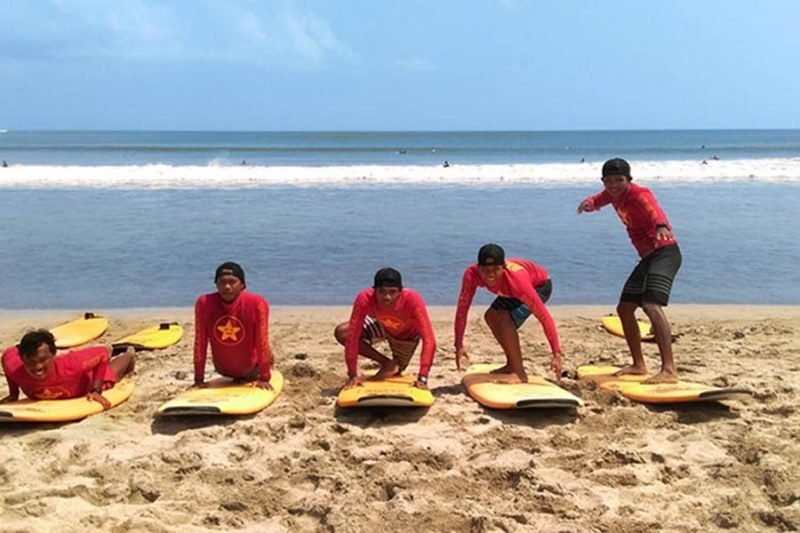
What to Bring to Your First Surf Lesson
Knowing What to Bring to Your First Surf Lesson can make your Bali experiences in the ocean much easier and more enjoyable. Beginners sometimes assume that they need to arrive with specialized surfing equipment, but most surf schools provide the essential gear. Your main responsibility is to come prepared with comfortable clothing, sun protection, drinking water, and a few practical items that will help you stay comfortable before and after your session.
Your first surf lesson is likely to involve more physical activity than you expect. You may paddle repeatedly, climb onto your board dozens of times, spend time in the water, and practice techniques on the beach. Being properly prepared means you can concentrate on learning instead of worrying about uncomfortable clothing, sunburn, dehydration, or missing essentials.
If you are planning to learn surfing in Bali, preparation is especially important because the tropical climate can expose you to strong sunlight while you are outdoors for an extended period.
What to Bring to Your First Surf Lesson: The Essentials
Before leaving your hotel or accommodation, make sure you have the basic items you will actually use.
A comfortable swimsuit or board shorts are usually the most important clothing items. Choose something that stays securely in place while swimming and moving around.
You should also bring sunscreen, drinking water, a towel, and a change of clothes.
A waterproof bag can be useful for keeping wet swimwear separate from your dry belongings afterward.
You may also want to bring a small amount of cash, depending on the surf school and whether additional services or refreshments are available.
Keep your packing simple. You do not need to arrive carrying a large backpack full of equipment.
The more unnecessary items you bring, the more things you have to keep track of while focusing on your lesson.
Swimwear That Stays Comfortable
Your swimsuit may seem like a minor detail, but the wrong clothing can become distracting during a surfing session.
Choose swimwear that fits securely and allows you to move freely.
For men, board shorts are a common choice. For women, a secure one-piece swimsuit, athletic bikini, or swimwear designed for active movement can work well.
Avoid loose clothing that can shift when you fall into the water.
Remember that surfing involves repeatedly moving between lying on the board and standing. Clothing that feels perfectly comfortable while sitting on a beach may not be ideal once you start paddling and getting up on a moving board.
If you already own swimwear that you use for swimming or other water activities, it will probably be suitable.
Consider Bringing a Rash Guard
A rash guard is not always mandatory, but it can be extremely useful.
It is a fitted shirt designed for water activities and can protect your skin from repeated rubbing against the surfboard.
Beginners often spend a lot of time lying on the board. The constant movement of your chest and stomach against the board can cause irritation, especially during a long lesson.
A rash guard also provides some protection from the sun.
This is particularly useful in Bali, where you may spend significant time exposed to tropical sunlight.
If your Bali surf lessons provides one, you may not need to bring your own. It is worth asking when you book the lesson.
Sunscreen Is One of the Most Important Items
Sun protection should be near the top of your preparation list.
Surfing places you directly under the sun for extended periods, and sunlight reflected from the water can increase your exposure.
Choose a water-resistant sunscreen with appropriate broad-spectrum protection and apply it before your lesson.
Do not forget areas that are easy to overlook, including the back of your neck, ears, shoulders, and the tops of your feet.
If you are staying in the water for an extended period, sunscreen may need to be reapplied according to the product instructions.
A common mistake among beginners is assuming that cloudy weather means sunscreen is unnecessary.
Cloud cover does not eliminate ultraviolet exposure.
Bring enough sunscreen rather than assuming you can buy it immediately after arriving at the beach.
Bring Drinking Water
Surfing is physical exercise.
Even if you are not an experienced athlete, you may paddle frequently and repeatedly climb onto your board.
The tropical climate can also cause you to lose fluids through sweating, even when you are spending much of your time in the ocean.
Bring a bottle of drinking water and make sure you hydrate before and after your session.
Do not wait until you feel extremely thirsty.
If you are planning a longer surfing day, consider bringing additional water or using a refill station when available.
Staying hydrated can help you feel more comfortable and energetic during the lesson.
A Towel Is Surprisingly Useful
A towel is an obvious item, but beginners occasionally forget it.
You may finish your session wet, sandy, and covered in seawater.
Having a towel available makes changing much easier.
If you are traveling around Bali and going directly to another activity afterward, a quick-drying microfiber towel can be particularly convenient because it takes up little space and dries faster than a thick traditional towel.
Some surf schools provide towels, but you should confirm this rather than assume it.
Bring a Complete Change of Clothes
Do not underestimate the value of dry clothing.
After surfing, you will probably want to remove your wet swimwear and put on something comfortable.
Pack a lightweight shirt, shorts, underwear, and whatever footwear you plan to use afterward.
A plastic bag or waterproof pouch can help separate wet clothes from everything else in your bag.
This is especially useful if you are continuing your Bali itinerary rather than returning directly to your hotel.
Keeping wet swimwear isolated also prevents the rest of your belongings from becoming damp and smelling unpleasant.
What About Surfboards?
You generally do not need to bring your own surfboard for a beginner lesson.
Most Bali surf lessons provide boards suitable for students at their current ability level.
Beginners commonly use larger boards because they offer greater stability.
The instructor can select an appropriate board based on your height, weight, experience, and the conditions.
If you already own a board and prefer to use it, discuss this with the instructor beforehand.
For a first lesson, however, using the equipment provided by the school is usually simpler.
You can concentrate on learning instead of transporting and maintaining your own equipment.
Do You Need Your Own Leash?
The leash is an important part of your surfing equipment, but it is normally supplied with the board.
It connects the board to your ankle and helps prevent the board from drifting away after you fall.
A surf school should explain how to attach and use it correctly.
Never assume that because you have seen surfers wearing leashes you automatically know how to use one safely.
Your instructor should check the setup before you enter the water.
If you later decide to purchase your own surfing equipment, you can learn more about different leash types as your experience grows.
For your first lesson, however, there is usually no reason to purchase specialized equipment.
Should You Bring Water Shoes?
Whether you need water shoes depends heavily on the beach and the conditions.
At sandy beginner beaches, they may not be necessary.
At locations with rocky areas, reef, or rough surfaces, appropriate footwear can provide additional protection.
Do not assume that every surf beach has the same bottom.
Ask your instructor about the specific location before your lesson.
If water shoes are recommended, choose a pair designed for water activities that fits securely and does not interfere with movement.
Avoid wearing ordinary sandals into the surf.
They can easily come off and become a hazard.
Sunglasses: Useful or Unnecessary?
Sunglasses can be useful before and after your lesson, but they are usually not practical while actively surfing unless they are specifically designed for water sports and securely fitted.
Regular sunglasses can easily fall into the ocean.
You do not want to lose an expensive pair during your first attempt at catching a wave.
A better approach is to wear sunglasses while waiting on the beach and keep them safely stored before entering the water.
A hat can also provide additional sun protection while you are on land.
A Waterproof Phone Case Can Help
Your phone can be useful for taking photos and communicating with your instructor or travel companions, but the ocean is a risky environment for electronics.
Even phones advertised as water-resistant are not necessarily designed to survive repeated exposure to saltwater, sand, and impacts.
A waterproof phone pouch can provide additional protection if you need to carry your phone near the beach.
However, the safest option is usually to leave your phone in a secure location while surfing.
If you want photos of your lesson, ask whether the surf school offers photography or whether someone can safely take pictures from the beach.
That way, you can focus on learning rather than worrying about your device.
Bring a Waterproof Bag
A small waterproof or water-resistant bag is one of the most practical things you can pack.
You can use it for your phone, wallet, room key, sunscreen, and other small belongings.
It is also useful for separating wet clothing afterward.
If your accommodation provides a waterproof pouch or dry bag, that may be enough.
You do not need a large expedition-style dry bag for a normal beginner lesson.
A compact bag that protects your essentials is usually sufficient.
What Not to Bring
Knowing what to leave behind is just as important as knowing what to pack.
Avoid bringing expensive jewelry, watches, unnecessary electronics, large amounts of cash, or valuable accessories.
The beach is not the ideal environment for delicate possessions.
Rings and bracelets can become uncomfortable while paddling and may be lost in the water.
Large bags are also unnecessary.
If you have valuable belongings, ask the surf school or your accommodation about secure storage.
The less you bring into the surfing environment, the fewer things you need to worry about.
Do You Need Food Before Surfing?
You should not arrive completely hungry, but eating a huge meal immediately before surfing is also not ideal.
A light meal or snack can provide useful energy.
Fruit, toast, oatmeal, yogurt, or another familiar light option can work well depending on your personal preferences.
Give your body enough time to digest before intense activity.
Everyone reacts differently to food before exercise, so avoid experimenting with an unusually heavy meal on the morning of your first lesson.
If you are surfing early in the morning, even a simple snack can be better than starting the session without any energy.
What Footwear Should You Bring?
For most beach-based surf lessons, simple sandals or flip-flops are enough for walking between your accommodation, transport, and the beach.
However, keep them somewhere secure while you are surfing.
If the lesson takes place in an area where you need to walk over rough ground, your instructor can tell you whether stronger footwear is appropriate.
After the session, having dry footwear can make the rest of your day much more comfortable.
If you are planning to explore Bali immediately afterward, choose footwear that is easy to put on and suitable for your next activity.
Prepare for Sand Everywhere
Sand has a remarkable ability to get into almost everything.
After a surf lesson, it may be on your feet, towel, clothing, bag, and even inside small pockets.
A simple rinse can make a significant difference.
If the surf school has shower facilities, take advantage of them.
Otherwise, bringing a small bottle of fresh water for rinsing your feet can be useful.
A separate plastic or waterproof bag for sandy clothing can also keep the rest of your belongings cleaner.
This may sound like a minor detail, but it can make traveling after your lesson considerably more comfortable.
What to Check Before Leaving Your Hotel
Before heading to the beach, take a quick look through your belongings.
Make sure you have your swimwear, sunscreen, water, towel, change of clothes, and any other essentials recommended by the surf school.
Check the weather and confirm the meeting location.
If transportation is included, make sure you know where and when you will be picked up.
It is also worth checking whether the surf school supplies a board, leash, rash guard, or other equipment.
A two-minute preparation check can prevent unnecessary problems later.
Your First Lesson Is About Learning, Not Looking Professional
Beginners sometimes worry about having the “right” surfing equipment.
You may see experienced surfers carrying specialized boards, wearing technical clothing, and discussing different types of equipment.
You do not need to imitate them immediately.
Your first lesson is about learning the fundamentals.
A simple swimsuit, sunscreen, water, towel, and change of clothes are often enough from your side.
The school handles most of the technical equipment.
As your interest develops, you can gradually learn about boards, fins, leashes, wetsuits, and other surfing gear.
There is no need to spend a large amount of money before you know whether surfing is something you enjoy.
A Simple Preparation Routine
On the day of your lesson, give yourself enough time to get ready without rushing.
Eat something light if you normally need food before exercise. Drink some water. Apply sunscreen before leaving. Wear comfortable swimwear and pack your dry clothes.
Once you arrive, listen carefully to your instructor.
If you have any concerns about swimming, injuries, fitness, or previous water experience, communicate them before entering the ocean.
Being honest helps the instructor choose the safest approach for your ability.
After the lesson, rinse off, change into dry clothes, drink water, and give your body time to recover.
You may be surprised by how tired your shoulders and legs feel afterward.
Knowing What to Bring to Your First Surf Lesson does not require complicated preparation. The goal is simply to make sure you have what you need to stay comfortable, protected, hydrated, and ready to learn.
Your surf school will normally provide the major equipment, so there is no need to purchase a board or other specialized gear before your first experience.
Focus on practical essentials: suitable swimwear, sunscreen, water, a towel, dry clothes, and a secure place for your belongings. Ask your instructor about anything specific to the beach you will be visiting.
Once everything is prepared, you can leave the rest to the experience.
Your first lesson may involve plenty of falling, paddling, laughing, and trying again. That is all part of learning. The important thing is to enjoy the process and give yourself time to develop confidence in the water.
If you are also wondering how quickly your surfing skills can develop after your first lesson, read our guide How Long Does It Take to Learn Surfing? for a practical look at the learning process and realistic beginner milestones.