

Marine Life You Can See While Diving in Bali
Bali is celebrated not only for its beautiful beaches and vibrant culture but also for its spectacular underwater world. Marine Life You Can See While Diving in Bali is one of the biggest reasons divers from around the globe visit the island every year. Beneath the surface lies a thriving ecosystem filled with colorful coral reefs, tropical fish, sea turtles, reef sharks, and countless fascinating marine creatures. Whether you’re taking your first introductory dive or you’re an experienced scuba enthusiast, every descent offers the opportunity to witness extraordinary ocean life in its natural habitat.
Stretching between the Indian Ocean and the Bali Sea, the island benefits from nutrient-rich currents that support an incredible variety of marine species. Different regions of Bali feature unique underwater environments, from shallow coral gardens and volcanic reefs to dramatic walls and historic shipwrecks. This diversity means that no two dives are ever exactly the same, making each underwater adventure exciting and full of surprises.
Why Marine Life You Can See While Diving in Bali Is So Diverse
Bali’s marine biodiversity is the result of its strategic location within the Coral Triangle, often called the “Amazon of the Seas.” This region contains one of the highest concentrations of marine species found anywhere on Earth.
Several natural factors contribute to Bali’s thriving water adventures ecosystem:
- Warm tropical waters throughout most of the year
- Healthy coral reef systems
- Volcanic underwater landscapes
- Nutrient-rich ocean currents
- Protected marine conservation areas
- Wide variety of underwater habitats
These conditions create ideal environments for thousands of marine organisms, from tiny nudibranchs measuring only a few centimeters to majestic manta rays with wingspans exceeding several meters.
Colorful Coral Reefs
Every underwater adventure begins with Bali’s remarkable coral reefs.
Corals are living animals that form vast underwater structures, providing shelter and food for countless marine species. Healthy reefs support entire ecosystems where fish, crustaceans, mollusks, and other sea creatures live together.
While diving in Bali, you’ll encounter several coral types, including:
- Hard corals
- Soft corals
- Table corals
- Brain corals
- Staghorn corals
- Mushroom corals
- Sea fans
- Sponge formations
Each coral formation contributes to an underwater landscape bursting with color and life.
Professional dive guides often explain the importance of coral conservation, helping visitors better understand these fragile ecosystems.
Clownfish
Perhaps the most recognizable marine species in Bali is the clownfish.
Made famous by popular animated films, these small orange-and-white fish live among sea anemones, which provide protection from predators.
Divers often enjoy watching clownfish:
- Feeding around their anemones
- Defending their territory
- Interacting with their partners
- Caring for eggs during breeding season
Despite their small size, clownfish are surprisingly territorial and fearless when protecting their homes.
Butterflyfish
Butterflyfish are among the most colorful reef inhabitants found throughout Bali.
Their bright patterns and graceful swimming make them easy to recognize even for first-time divers.
Common characteristics include:
- Thin, flat bodies
- Long snouts
- Bright yellow, white, black, and orange markings
- Slow, elegant movements
Many butterflyfish travel in pairs, creating beautiful underwater scenes for photographers.
Angelfish
Angelfish add another splash of vibrant color to Bali’s reefs.
Unlike butterflyfish, angelfish generally have larger bodies with striking combinations of blue, yellow, black, and white.
Different species inhabit various reef depths, making them common sightings during beginner and advanced dives alike.
Watching these fish glide effortlessly around coral formations is one of the simple pleasures of exploring Bali’s underwater world.
Parrotfish
Parrotfish play a surprisingly important role in maintaining healthy coral reefs.
Using powerful beak-like mouths, they scrape algae from coral surfaces while feeding.
This natural cleaning process helps prevent excessive algae growth that could otherwise damage reef ecosystems.
Divers frequently hear the distinct crunching sound produced as parrotfish feed on coral.
Many species display brilliant shades of:
- Turquoise
- Green
- Pink
- Purple
- Blue
- Yellow
Their constantly changing colors throughout different life stages make them particularly fascinating to observe.
Blue Tang
Blue tangs are another favorite among underwater photographers.
Their vivid royal-blue bodies with bright yellow tails stand out beautifully against Bali’s colorful reefs.
These active fish usually travel in small groups while feeding on algae.
They are commonly encountered at shallow and mid-depth dive sites, making them frequent companions during introductory dives.
Moorish Idols
Recognized by their long trailing dorsal fins, Moorish idols are among Bali’s most elegant reef fish.
Their distinctive black, white, and yellow coloration makes them instantly recognizable.
Unlike some reef species that hide among coral, Moorish idols often swim confidently in open water, allowing divers excellent viewing opportunities.
Their graceful movements create memorable underwater moments, especially when photographed against vibrant coral gardens.
Triggerfish
Triggerfish possess bold personalities and unique body shapes.
Although most species are harmless when left undisturbed, some become protective during nesting season.
Experienced Bali diving guides know how to identify nesting areas and help divers avoid unnecessary encounters.
Outside breeding periods, triggerfish are fascinating reef residents known for:
- Bright colors
- Powerful jaws
- Curious behavior
- Distinctive swimming style
Their ability to lock their dorsal fin upright inspired the name “triggerfish.”
Bannerfish
Bannerfish are frequently mistaken for Moorish idols because of their similar appearance.
However, they belong to a different fish family and often swim together in larger schools.
Their flowing dorsal fins create elegant movements as they weave through coral formations.
Large groups of bannerfish are especially impressive when visibility is excellent.
Surgeonfish
Surgeonfish are abundant throughout Bali’s reefs.
Named after the sharp, scalpel-like spines located near their tails, these fish spend much of the day grazing on algae.
Their constant feeding contributes to healthy reef ecosystems by preventing algae from overwhelming coral colonies.
Although they may appear ordinary at first glance, surgeonfish perform one of the reef’s most valuable ecological functions.
Giant Clams
Not every fascinating marine creature swims.
Giant clams remain attached to coral reefs throughout their lives, displaying brilliant blue, green, purple, or gold mantles that shimmer beneath the sunlight.
Some giant clams can live for more than a century.
Divers often stop to admire their intricate patterns before continuing through the reef.
Because these animals filter seawater continuously, they also contribute to maintaining healthy marine environments.
Sea Stars
Sea stars are commonly found resting on sandy bottoms or nestled among coral formations.
Although they move very slowly, they play important ecological roles within reef ecosystems.
Several species found around Bali display striking colors, including:
- Bright blue
- Deep red
- Orange
- Purple
- Brown
Photographing sea stars without disturbing them is a favorite activity for underwater macro enthusiasts.
Cleaner Shrimp
One of the reef’s smallest residents performs one of its most important jobs.
Cleaner shrimp establish “cleaning stations” where larger fish voluntarily stop to have parasites removed.
Divers who watch patiently may witness fascinating interactions between tiny shrimp and much larger fish species.
This natural partnership demonstrates the remarkable balance that exists within Bali’s marine ecosystems.
Sea Turtles
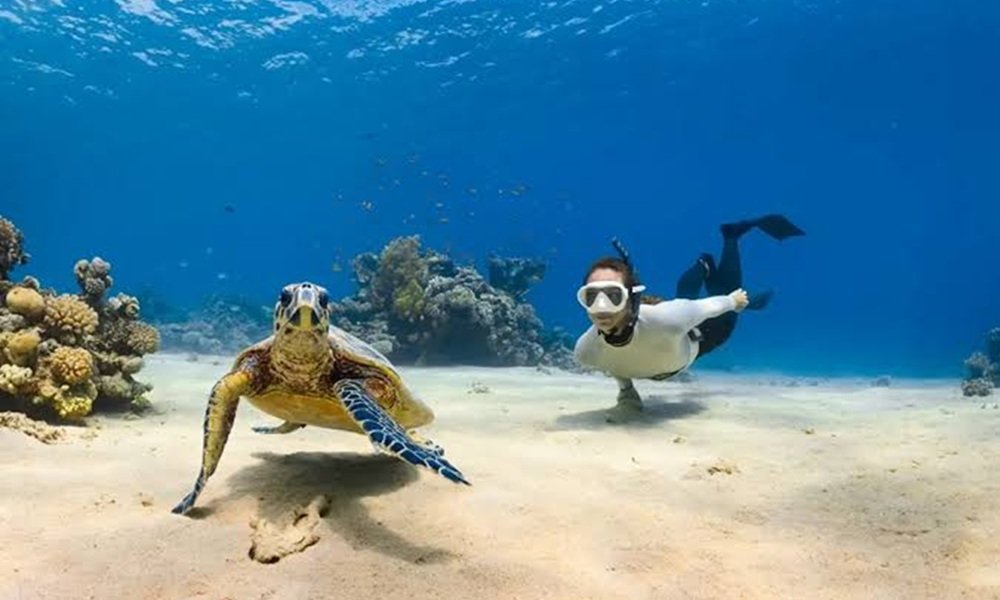
Few underwater encounters are as memorable as meeting a sea turtle gliding effortlessly through Bali’s clear waters. These gentle reptiles are among the highlights of Marine Life You Can See While Diving in Bali, and many divers consider them the most exciting wildlife sighting of their trip.
The species most frequently seen include:
- Green sea turtles
- Hawksbill sea turtles
Sea turtles are often spotted:
- Resting beneath coral ledges
- Swimming slowly above reefs
- Feeding on seagrass and algae
- Surfacing occasionally for air
Because they are protected animals, divers should always observe them from a respectful distance without attempting to touch or chase them.
Reef Sharks
Despite their intimidating reputation, reef sharks are generally shy and avoid human contact.
Blacktip reef sharks and whitetip reef sharks occasionally appear around Bali’s healthier reef systems, especially at locations with abundant marine biodiversity.
Seeing one for the first time is often an unforgettable experience.
Most encounters involve sharks calmly cruising through deeper water before disappearing into the blue.
These graceful predators play an essential role in maintaining balanced marine ecosystems.
Manta Rays
One of Bali’s most famous marine attractions is the majestic manta ray.
These enormous yet gentle creatures can have wingspans reaching several meters and are renowned for their elegant, bird-like movements underwater.
Manta rays are seasonal visitors to certain locations, particularly around Nusa Penida.
Divers may observe them:
- Gliding effortlessly above cleaning stations
- Swimming in small groups
- Performing graceful underwater turns
- Feeding on plankton-rich water
Watching a manta ray pass silently overhead is often described as one of the most magical diving experiences in Bali.
Moray Eels
Moray eels often surprise first-time divers because they appear to be constantly opening and closing their mouths.
In reality, this movement helps them breathe.
These fascinating predators usually remain hidden inside rock crevices while watching the surrounding reef.
Several species inhabit Bali’s waters, ranging from small spotted varieties to much larger giant moray eels.
Although they may look intimidating, morays rarely pose a threat when left undisturbed.
Octopus
Octopuses are masters of camouflage.
Their ability to instantly change color and texture allows them to blend perfectly with coral, rocks, or sand.
Finding one requires careful observation and an experienced dive guide.
If you’re lucky, you may witness an octopus:
- Changing colors within seconds
- Crawling across rocks
- Hunting small crustaceans
- Retreating into its den
These highly intelligent animals are among the reef’s most fascinating inhabitants.
Cuttlefish
Closely related to octopuses and squid, cuttlefish possess remarkable camouflage abilities.
Their bodies shimmer with constantly changing colors as they communicate or react to their surroundings.
Unlike many fish, cuttlefish move using gentle fin undulations, creating smooth, floating movements that seem almost hypnotic.
They are especially popular subjects for underwater photographers because of their expressive behavior.
Nudibranchs
Macro enthusiasts travel from around the world specifically to photograph nudibranchs.
These tiny sea slugs display extraordinary colors and patterns.
Some resemble flowers, while others look almost alien.
Popular varieties include:
- Blue nudibranchs
- Purple nudibranchs
- Orange-spotted species
- Black-and-white varieties
- Pink and yellow combinations
Although often only a few centimeters long, nudibranchs showcase some of the ocean’s most vibrant natural colors.
Seahorses
Spotting a seahorse requires patience and a sharp eye.
These tiny creatures anchor themselves to coral or seagrass using their curled tails while waiting for plankton to drift past.
Because they blend so well with their surroundings, most divers would swim right past them without noticing.
Experienced dive guides know where to search and can often point them out without disturbing their natural behavior.
Finding your first seahorse is a rewarding moment during any dive.
Schools of Tropical Fish
One of the most breathtaking sights in Bali occurs when hundreds of fish move together as a single synchronized group.
Large schools may include:
- Snapper
- Fusiliers
- Barracuda
- Trevally
- Surgeonfish
As sunlight filters through the water, these shimmering schools create constantly changing patterns that transform the underwater landscape.
Even experienced divers never tire of witnessing this remarkable natural phenomenon.
Seasonal Marine Life Encounters
Although Bali offers excellent diving year-round, certain marine species are more likely to appear during specific seasons.
Depending on ocean conditions and migration patterns, divers may have opportunities to encounter:
- Manta rays during favorable plankton seasons
- Ocean sunfish (Mola Mola) during cooler months in deeper waters
- Increased reef fish activity during spawning periods
- Seasonal plankton blooms attracting larger marine animals
No dive operator can guarantee wildlife sightings, but understanding seasonal patterns helps maximize your chances.
Best Dive Sites for Marine Life
Different dive locations are known for different underwater attractions.
Tulamben
Tulamben combines healthy coral reefs with the famous USAT Liberty Shipwreck.
Divers frequently encounter:
- Schools of reef fish
- Giant bumphead parrotfish
- Moray eels
- Nudibranchs
- Garden eels
Amed
Amed offers relaxed shore diving with rich biodiversity.
Its volcanic reefs are home to:
- Clownfish
- Butterflyfish
- Blue tangs
- Sea turtles
- Macro marine life
Padang Bai
Padang Bai features several dive sites with calm conditions and diverse wildlife.
Common sightings include:
- Octopus
- Frogfish
- Ribbon eels
- Lionfish
- Reef fish
Menjangan Island
Located within a protected national park, Menjangan Island boasts exceptionally healthy coral reefs.
Divers often enjoy:
- Crystal-clear visibility
- Massive sea fans
- Reef sharks
- Sea turtles
- Colorful coral walls
Responsible Wildlife Observation
Protecting marine ecosystems is every diver’s responsibility.
When observing Marine Life You Can See While Diving in Bali, follow these best practices:
- Maintain neutral buoyancy.
- Never touch coral or marine animals.
- Avoid blocking an animal’s path.
- Keep a respectful distance.
- Never feed wildlife.
- Follow your dive guide’s instructions.
- Use reef-safe sunscreen before entering the water.
Responsible diving ensures Bali’s underwater ecosystems remain healthy for future generations while minimizing stress on marine animals.
Tips for Spotting More Marine Life
One of the most rewarding aspects of diving is discovering animals that many people overlook. While some species are easy to spot, others blend perfectly into their surroundings. Learning a few observation techniques can significantly improve your underwater experience.
To increase your chances of seeing more wildlife:
- Move slowly and avoid sudden movements.
- Breathe calmly to reduce noise and bubbles.
- Let your dive guide lead the way.
- Scan coral crevices carefully.
- Watch sandy areas for hidden creatures.
- Look into the blue water occasionally for larger animals.
- Be patient and avoid rushing through the dive.
Marine life is generally more relaxed around divers who remain calm and respectful, allowing for longer and more natural encounters.
Underwater Photography Tips
Capturing the beauty of Marine Life You Can See While Diving in Bali is a goal for many visitors. Even beginners can take impressive underwater photos by following a few simple techniques.
For the best results:
- Get as close as safely possible without disturbing wildlife.
- Avoid using excessive zoom.
- Keep your camera steady.
- Take advantage of natural sunlight in shallow water.
- Photograph animals from the side rather than directly above.
- Focus on the eyes when photographing fish or turtles.
- Respect marine life by never manipulating animals for a better picture.
Remember that enjoying the moment is often more valuable than trying to photograph everything you see.
How Dive Guides Help You Find Hidden Creatures
Professional dive guides possess remarkable knowledge of local marine ecosystems.
Years of experience allow them to identify subtle signs that most divers would miss.
For example, they know how to recognize:
- Tiny movements beneath coral ledges
- Camouflaged octopuses changing color
- Nearly invisible seahorses attached to sea fans
- Nudibranchs hiding among soft corals
- Sleeping turtles beneath reef overhangs
- Moray eels peeking from rocky crevices
Their expertise greatly increases the chances of observing rare and fascinating marine species during your dive.
Why Every Dive Is Different
No two dives in Bali are ever exactly alike.
Ocean currents, tides, weather conditions, time of day, and seasonal migrations all influence which animals appear on a particular dive.
One morning you may spend most of your dive surrounded by colorful reef fish.
The following day could bring encounters with sea turtles, reef sharks, or even graceful manta rays.
This unpredictability is part of what makes scuba diving so exciting. Every descent offers a new opportunity to witness something extraordinary.
Helping Protect Bali’s Marine Ecosystem
The incredible diversity of Marine Life You Can See While Diving in Bali depends on healthy oceans and responsible tourism.
Divers can make a positive impact by adopting environmentally friendly habits during every trip.
Simple actions include:
- Choose dive operators committed to marine conservation.
- Avoid purchasing souvenirs made from coral or shells.
- Reduce single-use plastic whenever possible.
- Participate in reef or beach clean-up events if available.
- Support marine conservation programs in Bali.
- Share responsible diving practices with other travelers.
Protecting the ocean today helps ensure that future visitors can enjoy the same breathtaking underwater experiences.
Frequently Asked Questions
What is the most common marine animal seen while diving in Bali?
Colorful reef fish such as clownfish, butterflyfish, angelfish, parrotfish, and blue tangs are among the most frequently encountered species. Sea turtles are also common at many dive sites.
Can beginners see exciting marine life?
Absolutely.
Even beginner-friendly dive sites feature healthy coral reefs filled with tropical fish, sea stars, giant clams, and other fascinating creatures. You don’t need advanced certification to enjoy Bali’s underwater biodiversity.
Are dangerous marine animals common?
Most marine species in Bali are harmless when treated respectfully.
Professional dive guides provide safety briefings and know how to avoid unnecessary interactions with potentially defensive wildlife.
When is the best time to see marine life?
Bali offers excellent diving throughout the year. However, certain seasonal visitors, such as manta rays and the famous ocean sunfish (Mola Mola), are more likely to appear during specific months depending on ocean conditions.
Can I help protect marine life during my dive?
Yes.
Maintaining good buoyancy, avoiding contact with coral, respecting wildlife, and following your instructor’s guidance all contribute to protecting Bali’s marine ecosystems.
Experience Bali’s Incredible Underwater World
Exploring the Marine Life You Can See While Diving in Bali is far more than simply observing fish beneath the waves. Every dive introduces you to a thriving ecosystem where vibrant coral reefs support countless species, from tiny cleaner shrimp and brilliantly colored nudibranchs to graceful sea turtles, majestic manta rays, and curious reef sharks.
Whether you visit the volcanic reefs of Amed, the historic waters of Tulamben, the colorful dive sites around Padang Bai, or the pristine coral walls of Menjangan Island, each destination reveals its own underwater treasures. Combined with warm tropical waters, excellent visibility, and experienced local dive professionals, Bali provides unforgettable opportunities to witness one of the world’s richest marine environments.
Every descent beneath the surface is an invitation to slow down, observe nature closely, and appreciate the remarkable biodiversity hidden just beyond Bali’s shoreline. With responsible diving practices and respect for marine conservation, these extraordinary underwater encounters can continue inspiring travelers for generations to come.
Planning your first underwater adventure? Read What to Expect on Your First Bali Dive to learn every step before entering Bali’s amazing underwater world.