

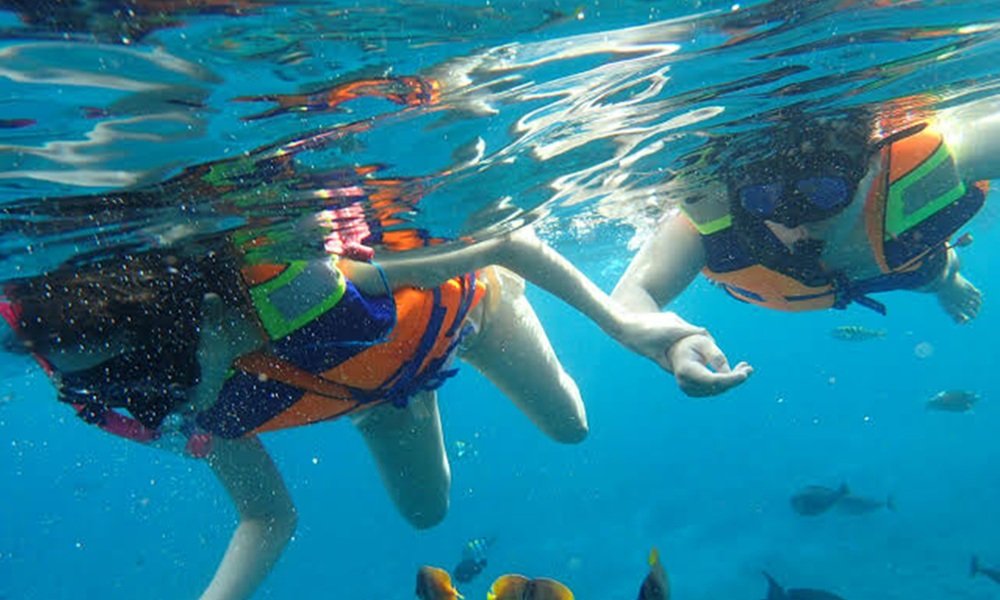
Best Snorkeling Spots in Nusa Penida
The Best Snorkeling Spots in Nusa Penida offer a completely different experience from many of Bali’s mainland beaches. The island is surrounded by dramatic cliffs, clear tropical water, coral gardens, and marine habitats that attract reef fish, turtles, manta rays, and other fascinating sea life. Some locations are accessible directly from the beach, while others are better explored by boat.
Nusa Penida is not one single snorkeling environment. Each area has its own personality. Crystal Bay is known for its sheltered bay and colorful reef, Gamat Bay offers an impressive coral landscape, while manta destinations provide the possibility of encountering one of the ocean’s most graceful creatures.
Choosing the right location depends on what you want to see, how comfortable you are in open Bali water adventures, and the conditions on the day of your trip.
Why Nusa Penida Is Special for Snorkeling
Nusa Penida sits off the southeastern coast of Bali and is surrounded by productive marine waters. The island’s underwater scenery is part of what has made it one of Indonesia’s most popular destinations for snorkeling and diving.
The official Indonesia tourism website highlights Crystal Bay, Manta Point, and Malibu Point among the island’s snorkeling locations.
What makes the experience particularly interesting is the variety.
You can spend one session floating above shallow coral and watching reef fish, then travel by boat to another location where larger marine animals may appear.
The underwater landscape can also change dramatically. Some areas feature sheltered bays, while others are exposed to open ocean conditions.
This variety is one of the biggest reasons to explore more than one snorkeling location when conditions allow.
Crystal Bay
Crystal Bay is probably the most recognizable Nusa Penida snorkeling tour destination.
Located in a scenic bay on the island’s western side, it combines a beautiful tropical beach with an underwater environment that attracts both snorkelers and divers.
The sheltered portion of the bay can offer colorful coral, reef fish, and opportunities to encounter turtles. Local information also notes that the shallow reef areas can be particularly rewarding for snorkelers who remain inside the more protected section of the bay.
The scenery above the water is another reason people enjoy Crystal Bay. A small rocky island sits offshore, creating the distinctive landscape often seen in photographs of the area.
But Crystal Bay should not be judged only by its appearance.
Conditions can become significantly stronger toward the outer part of the bay. Currents can increase around the deeper sections and near the channel, so visitors should stay within areas appropriate for their ability and follow local guidance.
For many visitors, the best strategy is to enjoy the reef inside the bay rather than trying to swim toward the offshore rock.
What You Might See at Crystal Bay
Depending on conditions and luck, snorkeling here can reveal:
- Reef fish
- Colorful coral
- Sea turtles
- Various smaller marine creatures
Crystal Bay is also famous for mola mola, or ocean sunfish, but there is an important distinction: the famous mola mola encounters are primarily associated with diving in deeper water rather than ordinary snorkeling.
The local dive information places the main mola mola season around July through October, while emphasizing that sightings are never guaranteed.
So if your main goal is snorkeling, visit Crystal Bay for its reef environment and marine diversity rather than expecting to see a mola mola at the surface.
Gamat Bay
Gamat Bay is a strong choice for travelers who want a more natural-looking reef environment.
The bay is surrounded by rugged coastal scenery, and its underwater area includes a shallow coral plateau that can be explored from above.
Local sources describe Gamat Bay as a rewarding Nusa Penida snorkeling tour location where visitors may encounter reef fish and turtles over the shallow coral.
One of its biggest attractions is the feeling of swimming above a living underwater garden.
Instead of focusing only on large animals, take time to look closely at the reef.
Small fish moving between coral formations can be just as fascinating as a larger encounter.
Is Gamat Bay Suitable for Everyone?
This is where travelers should be realistic.
Gamat Bay can be beautiful, but the surrounding waters can experience strong and changing currents.
The beach itself is not a place where you should simply enter the water without understanding the conditions. Local guidance specifically recommends caution, the use of fins, avoiding solo snorkeling, and staying close to the appropriate area.
For that reason, a boat-based snorkeling trip with an experienced local crew can be a more practical choice than independently swimming far from shore.
The attraction of Gamat Bay is the underwater scenery—not how far you can swim.
Manta Point
For many visitors, Manta Point is the reason Nusa Penida appears on their snorkeling itinerary in the first place.
The location is associated with manta rays, and Indonesia’s official tourism information lists Manta Point on the southern side of Nusa Penida as one of the island’s snorkeling destinations.
Manta rays are among the most impressive animals you can encounter in tropical waters.
They are large, graceful, and surprisingly calm when observed responsibly.
Unlike a reef fish encounter, seeing a manta can feel like watching a giant bird flying underwater.
What Makes Manta Point Different?
The attraction here is not primarily coral photography.
It is the possibility of observing large pelagic animals in their natural environment.
Local diving information reports frequent manta encounters at Manta Point and notes that manta rays can sometimes be found relatively close to the surface, making the site relevant to snorkelers as well as divers.
However, a wildlife encounter is never something that should be treated as guaranteed.
Manta rays move freely through the ocean.
Their presence, distance, and behavior can change from one day to another.
The best experience is to remain patient and allow the animals to approach naturally.
Manta Bay
Manta Bay is another name you may encounter when researching snorkeling around Nusa Penida.
It is important not to assume that every “manta” location offers exactly the same experience.
Different sites have different water movement, access arrangements, and marine conditions.
Some snorkeling itineraries combine manta-focused locations with reef areas such as Gamat Bay or Crystal Bay, giving travelers a broader experience rather than spending the entire day searching for one animal.
This can be a smart approach.
If the mantas do not appear, you still have the opportunity to enjoy coral, reef fish, and other marine life at another location.
Malibu Point
Malibu Point is another snorkeling destination identified by Indonesia’s official tourism information. It is located on the eastern side of Nusa Penida.
Compared with the famous names associated with manta rays, Malibu Point receives less attention from casual visitors.
That can be part of its appeal.
Travelers interested in exploring different underwater environments may appreciate adding a less famous location to their itinerary.
As with every snorkeling site around Nusa Penida, conditions determine whether a particular location is suitable on a given day.
A destination that looks ideal on a map may not be the best choice if wind, waves, currents, or visibility are unfavorable.
This is why local operators often have several locations available rather than committing every trip to exactly the same route.
Toyapakeh and the Northwest Coast
The waters around Toyapakeh are also associated with snorkeling and diving trips departing from the northwest side of Nusa Penida.
This area is particularly useful as a departure point for boat-based snorkeling itineraries.
Rather than thinking only in terms of a single beach, consider the surrounding marine area as a network of snorkeling locations.
A boat allows you to move between different underwater environments without spending most of the day traveling overland.
Depending on conditions, a trip may combine reef snorkeling with a chance to look for larger marine animals.
The exact route should always remain flexible.
Ocean conditions can make one location better than another on a particular day.
What Marine Life Can You See?
Nusa Penida’s marine environment is much more than manta rays.
Depending on the location and conditions, snorkelers may encounter:
- Sea turtles
- Butterflyfish
- Angelfish
- Damselfish
- Parrotfish
- Surgeonfish
- Reef wrasses
- Moray eels
- Rays
- Various coral species
The smaller reef fish deserve more attention than they often receive.
Watch how they interact with the coral rather than simply swimming past.
Some fish stay close to specific formations, while others move through the reef in small groups.
If you slow down, you may discover much more than you would by covering a large area quickly.
The Best Spot Depends on What You Want
There is no single answer for every traveler.
If you want colorful reef scenery and an iconic landscape, Crystal Bay is an obvious candidate.
If your priority is coral and turtles, Gamat Bay can be particularly attractive when conditions are suitable.
If your dream is to swim near a manta ray, a manta-focused snorkeling trip deserves consideration.
If you want to explore different environments, a multi-stop boat excursion can provide a more varied experience.
The important thing is to match the destination to your expectations.
A traveler searching for manta rays should not choose a location solely because it has the most colorful coral.
Likewise, someone interested in relaxed reef snorkeling may not need to prioritize a more exposed site simply because it is famous.
Boat Snorkeling vs. Beach Snorkeling
Nusa Penida offers both styles.
Beach snorkeling can provide independence and a slower pace. You can enter the water without being tied to a boat schedule, assuming the beach and conditions are appropriate.
Boat snorkeling, on the other hand, gives access to locations that are difficult or impractical to reach from shore.
For visitors interested in several marine environments, the boat option can be much more efficient.
It also allows local crews to adjust the itinerary according to conditions.
If one location has poor visibility or stronger currents, another may offer a better experience.
This flexibility is particularly valuable around Nusa Penida.
When Is the Best Time to Go?
Season matters, but it does not determine everything.
Dry-season months can provide favorable weather windows, but conditions still vary from day to day.
Wind and currents can influence individual snorkeling sites even when the sky is perfectly clear.
The best approach is to look at the season while also checking the actual conditions close to your trip.
If you are deciding when to visit Nusa Penida specifically for snorkeling, our guide to the Best Time of Year for Bali Snorkeling Adventures provides a broader look at Bali’s seasonal conditions.
Flexibility is often more useful than trying to identify one magical month.
Why Local Guides Matter in Nusa Penida
Nusa Penida’s underwater beauty comes with a variable environment.
Currents can be stronger than they appear from the surface, and conditions can differ significantly between nearby locations.
A local crew understands these differences.
They can determine whether a particular site is appropriate, where to enter the water, where to remain, and when conditions are no longer suitable.
This is especially important for visitors who have never snorkeled around the island.
A good operator should not simply take every group to the same location regardless of conditions.
The route should be adapted to the ocean.
Responsible Snorkeling Matters
Nusa Penida’s popularity means its marine environment receives a large number of visitors.
Every snorkeler has a role in protecting it.
Never stand on coral.
Do not touch marine animals.
Do not chase turtles or manta rays.
Avoid feeding wildlife.
Keep your distance and allow animals to move naturally.
Be careful with waterproof equipment and other objects that could damage coral.
Small actions may seem insignificant during one visit, but responsible behavior becomes increasingly important as visitor numbers grow.
The best snorkeling experience leaves the reef exactly as you found it.
What About Beginners?
Beginners can enjoy Nusa Penida, but choosing the right site and conditions is particularly important.
Not every famous snorkeling location should be treated as beginner-friendly in every condition.
A beginner should prioritize calm conditions, appropriate flotation equipment, close supervision, and a route selected by an experienced local operator.
Do not choose a site based solely on its popularity on Instagram or TikTok.
The most photographed location may not be the easiest place for someone experiencing open-water snorkeling for the first time.
If you are preparing for your first snorkeling adventure, it is worth reading our guide on How to Prepare for a Safe Bali Snorkeling Experience before choosing your itinerary.
A Better Way to Explore Nusa Penida’s Underwater World
Rather than trying to visit every famous location, think about what kind of day you want.
A relaxed reef-focused trip might combine Crystal Bay and Gamat Bay.
A wildlife-focused itinerary might prioritize manta locations.
A traveler who wants variety may prefer a multi-stop boat excursion.
And someone with limited time may be better off choosing one or two locations with good conditions rather than spending most of the day moving between destinations.
The best itinerary is not necessarily the longest one.
It is the one that gives you enough time to appreciate what you actually see.
Nusa Penida has earned its reputation as one of Bali’s premier snorkeling destinations for good reason.
Its underwater world offers an unusual combination of coral reefs, tropical fish, turtles, dramatic coastal scenery, and the possibility of encountering manta rays.
Crystal Bay provides a beautiful introduction to the island’s marine environment, while Gamat Bay can reward visitors with colorful shallow reefs and turtle encounters. Manta-focused locations offer something completely different: the chance to observe one of the ocean’s most impressive animals.
But the most important thing to remember is that conditions always matter.
Currents, waves, wind, visibility, tides, and marine wildlife are constantly changing.
A location that was excellent yesterday may not be the right choice today.
That is why flexibility and local knowledge are so valuable when exploring Nusa Penida.
Choose your destination based on your experience and interests, listen to your local guide, respect the ocean, and allow the conditions to shape your itinerary.
When you do that, Nusa Penida becomes more than a place to collect underwater photographs.
It becomes an opportunity to experience a remarkable marine environment in a responsible and memorable way.
Crystal Bay is ideal for reef scenery and a classic Nusa Penida experience, Gamat Bay is attractive for coral and turtle encounters, and Manta Point is the destination to consider for manta ray encounters. Malibu Point and other northwest and eastern locations can add variety depending on sea conditions and the day’s itinerary.