

Bali Sea Walker vs Snorkeling
Choosing between Bali Sea Walker vs Snorkeling can be surprisingly difficult, especially if you have never tried an underwater activity before. Both allow you to experience Bali’s tropical marine environment, but they create completely different kinds of water adventures. One lets you walk along the seabed while wearing an underwater helmet, while the other allows you to float on the surface and observe the reef through a mask and snorkel.
For travelers planning a Bali adventure, the right choice depends on more than simply which activity looks more exciting in photos. Your swimming ability, comfort in the ocean, interest in marine life, physical condition, and the type of experience you want can all influence which activity is more suitable.
Bali sea walker is particularly appealing to people who want to experience being underwater without learning scuba diving. Snorkeling, meanwhile, offers greater freedom of movement and can be an excellent way to explore shallow reefs over a longer period.
Understanding the differences before booking can help you choose an activity that matches your expectations rather than simply following the most popular option.
Bali Sea Walker vs Snorkeling: What Is the Main Difference?
The biggest difference is how you move and breathe underwater.
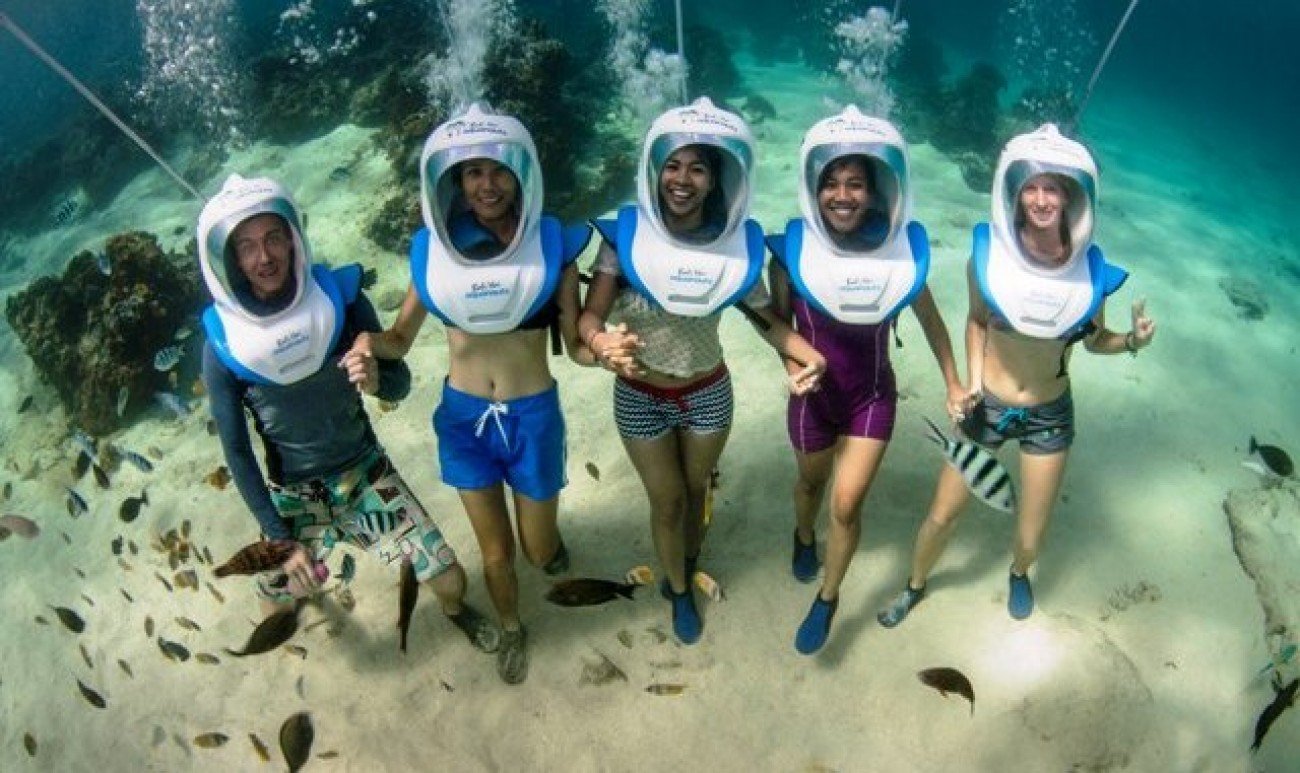
During a sea walker experience, participants normally wear a special helmet connected to an air supply from above. The helmet allows you to breathe while standing or walking on the seabed. Undersea-walking guidelines describe the activity as a guided experience in which participants walk along the seabed while receiving air through a helmet and hose system.
Snorkeling works differently. You remain near the surface, wear a mask and snorkel, and breathe through the snorkel while looking down into the water. Fins are commonly used to make swimming easier.
This creates an important distinction. Sea walking feels more like entering an underwater world, while snorkeling feels more like floating above it.
The difference is also noticeable in how much control you have over your movement. A sea walker generally follows a designated underwater route with an instructor or guide. A snorkeler can usually swim, float, turn, and explore around a permitted area more independently.
Neither activity is automatically better. They simply provide different ways of experiencing Bali’s coastal environment.
How a Sea Walker Experience Feels
The first few moments underwater can feel unusual.
You are wearing a helmet that may feel heavy while you are above the water. Once underwater, however, the sensation can change considerably. Recent visitor reports describe participants becoming comfortable after getting used to the helmet and breathing system.
Instead of swimming, you normally walk slowly along the seabed while an underwater guide accompanies you. Colorful fish may swim around you, and you can look at coral and other marine features from a much closer perspective than you would from the surface.
One of the most interesting aspects is the psychological experience. You can look around while standing underwater without having to constantly concentrate on staying afloat.
For someone nervous about swimming, this can make the activity feel more manageable. However, it does not mean that sea walking is completely risk-free or suitable for everyone. Participants should follow the operator’s safety briefing and communicate immediately if they feel uncomfortable.
The helmet also creates a different visual experience. Instead of repeatedly lifting your head to breathe, you can keep your attention focused on what is happening around you.
For many first-time visitors, that makes the experience feel more immersive.
What Makes Snorkeling Different?
Snorkeling is more active and flexible.
Once you put on your mask, snorkel, and fins, you float at the surface and use your legs to move through the water. You can change direction, look toward different sections of the reef, and cover a larger area depending on the conditions and the tour route.
That freedom is one of snorkeling’s biggest advantages.
If you enjoy swimming and want to spend a significant amount of time observing marine life, snorkeling may feel more natural. You can move between different areas rather than following a fixed walking route.
Snorkeling can also be more appealing to travelers who want to explore Bali’s wider range of coastal environments. Depending on the trip, snorkeling may involve beaches, coral gardens, offshore reefs, lagoons, or boat-accessed locations.
However, snorkeling requires you to be comfortable floating and breathing through a snorkel. Ocean conditions can also affect the experience. Strong currents, high waves, poor visibility, and wind can make snorkeling more challenging. Ocean-safety guidance recommends checking conditions before entering the water and using appropriate flotation equipment when necessary.
That is why beginners should not assume that snorkeling is automatically easier simply because it uses less equipment.
Which Activity Is Better for Non-Swimmers?
This is one of the most important questions when comparing the two.
For travelers who cannot swim confidently, Bali sea walker can be attractive because you are not required to swim around the activity area. You walk on the seabed while wearing the supplied helmet and following the instructions of the underwater guide.
However, non-swimmers should still be honest about their comfort level in the ocean.
Being unable to swim does not mean you should ignore safety considerations. You still need to enter the water, descend to the underwater activity area, and remain comfortable in an unfamiliar environment.
Snorkeling is generally more dependent on swimming or floating ability. Even when a flotation vest is provided, you should feel comfortable having your face in the water and understand how to breathe through the snorkel.
For this reason, a beginner who is uncomfortable swimming may find sea walking more appealing, while a confident swimmer will often appreciate the freedom offered by snorkeling.
Which Is Better for Families?
Families should consider the ages, swimming abilities, and personalities of everyone participating.
Sea walking can be a memorable option for families because participants do not need to spend the entire activity swimming. The underwater helmet creates a fascinating experience for people who have never explored beneath the surface before.
Children, however, must meet the operator’s age, size, and safety requirements. Parents should always confirm those requirements before booking rather than assuming that every child can participate.
Snorkeling can also be excellent for families, particularly when the water is calm and shallow. Children who already enjoy swimming may find it exciting because they can actively move through the water.
For families with mixed abilities, the best option may depend on the individual members rather than the group as a whole.
One person might love the freedom of snorkeling, while another may feel much more comfortable with a guided sea walking experience.
Marine Life: Which One Gives You More to See?
This depends heavily on the location and ocean conditions.
Sea walking gives you the advantage of viewing marine life while standing directly on or near the seabed. Fish can sometimes approach participants, creating memorable close-up encounters. Some commercial experiences also include opportunities to interact with or feed fish, although practices vary by operator. Recent visitor reports describe seeing tropical fish and coral at close range during sea walker activities.
Snorkeling, on the other hand, gives you greater freedom to search for marine life across a wider area.
You may see reef fish, coral formations, sea turtles, and other marine species depending on the destination and season. Because you can swim around, snorkeling can sometimes provide a broader view of the underwater environment.
If your priority is getting close to fish in a controlled underwater setting, sea walking may be more appealing.
If your priority is exploring a larger reef area and actively searching for marine life, snorkeling may be the better choice.
In either case, remember that marine animals are wild creatures. They should be observed without touching, chasing, or feeding them unless an activity is specifically designed and managed for responsible interaction.
Comfort and Equipment Considerations
Equipment is another major difference.
Sea walking usually involves a large underwater helmet and an air-supply system. The helmet allows you to breathe while keeping your face inside a protected air space.
Snorkeling equipment is much lighter. A basic setup normally consists of a mask, snorkel, and fins. Some participants may also use a flotation vest.
The feeling of the equipment matters more than many travelers expect.
With snorkeling, a poorly fitted mask can leak or fog, while an uncomfortable snorkel can make breathing frustrating. Ocean-safety recommendations emphasize checking that masks fit properly and that snorkels are clear before entering the water.
With sea walking, the main adjustment is getting used to the helmet and the sensation of being underwater while walking.
If you are claustrophobic, you may want to discuss the experience with the operator before booking. Likewise, if you dislike wearing heavy equipment around your head, snorkeling may feel more comfortable.
Which Activity Is More Adventurous?
The answer depends on what you consider an adventure.
Snorkeling provides physical freedom. You swim, kick, explore, and move through the water. There is a stronger feeling of actively exploring the ocean.
Sea walking provides a different kind of adventure. You descend beneath the surface and walk through an underwater environment while surrounded by fish and coral.
For someone who has never experienced an underwater activity, the simple act of walking beneath the ocean can feel extraordinary.
This is also why sea walking can be a good introduction for travelers who are curious about scuba diving but are not ready to learn diving techniques.
A sea walker experience does not replace scuba diving, but it can provide a taste of what it feels like to spend time beneath the surface.
Is Snorkeling More Physically Demanding?
Usually, snorkeling requires more active movement.
You need to float, kick your legs, maintain your position, and sometimes swim against gentle currents. Even when the water appears calm, extended snorkeling can become tiring.
Sea walking generally involves slower movement. The activity is usually conducted along a controlled underwater route, meaning participants do not need to continuously swim.
That does not mean sea walking requires no physical effort. You still need to walk underwater, maintain balance, and adapt to the equipment.
The important point is that the two activities use your body differently.
Someone who enjoys swimming may find snorkeling relaxing, while another traveler may prefer the slower pace of walking underwater.
What About Safety?
Safety should be part of the decision, regardless of which activity you choose.
For snorkeling, ocean conditions are particularly important. High waves, strong currents, heavy shorebreak, and poor visibility can create dangerous conditions. Official ocean-safety guidance recommends assessing conditions before entering the water, snorkeling with a buddy, and avoiding areas where conditions are unsuitable.
Sea walking also requires professional supervision and properly maintained equipment. Operators should provide clear instructions before participants enter the water and have procedures for dealing with equipment or participant problems.
Never choose an activity solely because it is advertised as easy.
A reputable operator should explain what you can expect, provide appropriate equipment, and make safety procedures clear.
If you feel uncomfortable at any point, tell the instructor. There is no reason to continue an activity simply because you have already paid for it.
Which One Should You Choose?
The simplest way to decide is to think about the experience you want.
Choose sea walking if you:
- Want to experience being underwater without swimming continuously
- Are fascinated by the idea of walking on the seabed
- Want a guided and structured underwater experience
- Are a beginner looking for something different from traditional snorkeling
- Prefer a slower underwater activity
- Want an unusual Bali vacation memory
Choose snorkeling if you:
- Are comfortable swimming or floating
- Want more freedom to move around
- Enjoy actively exploring reefs
- Prefer lightweight equipment
- Want to spend more time swimming and observing marine life
- Enjoy water activities that feel more physically active
There is also no rule saying you must choose only one.
If your Bali itinerary allows enough time, experiencing both can be an excellent way to understand the difference. Bali Sea walking can introduce you to the underwater environment from a completely different perspective, while snorkeling allows you to explore the surface and reef more freely.
Bali Sea Walker vs Snorkeling: The Final Verdict
When comparing Bali Sea Walker vs Snorkeling, there is no universal winner.
Sea walking is about immersion, simplicity, and the novelty of walking beneath the ocean. It can be particularly attractive to first-time underwater adventurers and travelers who are not confident swimmers.
Snorkeling is about freedom, movement, and exploration. It can be a better choice for confident swimmers who want to cover more of a reef area and spend more time actively exploring.
Your ideal choice ultimately depends on your confidence in the water, your physical comfort, and what you want to remember from your Bali trip.
If you want to stand beneath the surface and watch tropical fish swim around you, sea walking offers a fascinating experience. If you want to glide across the surface and explore a reef at your own pace, snorkeling may be the better fit.
Either way, Bali’s tropical waters offer an opportunity to see a side of the island that cannot be experienced from the beach alone. Choose the activity that matches your comfort level, listen carefully to your guides, respect the marine environment, and focus on enjoying the experience.
For travelers who want to understand the sea walking experience before deciding, read What Is a Bali Sea Walker Experience? to learn more about what to expect before going underwater.