

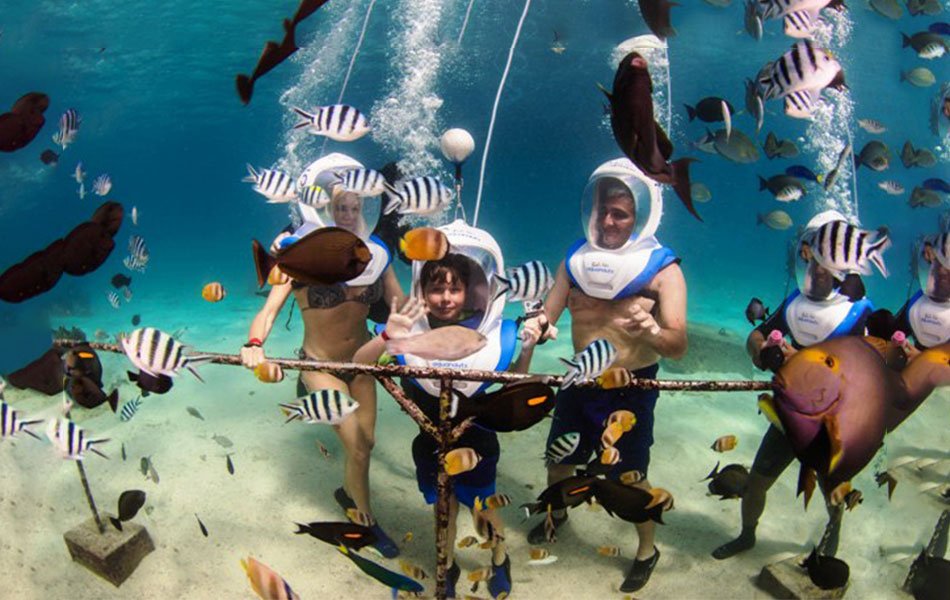
Can Non Swimmers Enjoy Bali Sea Walker?
If you cannot swim but want to experience the underwater world during your vacation, you may be wondering, Can Non Swimmers Enjoy Bali Sea Walker? Unlike traditional snorkeling or scuba diving, sea walking allows participants to explore beneath the surface while walking along the seabed and wearing a specialized underwater helmet. This makes it an interesting option for travelers who are curious about marine life but are not confident swimmers.
The concept sounds simple: instead of swimming, you walk underwater while breathing normally through the helmet’s air-supply system. A guide stays with participants throughout the activity, and the experience generally takes place in a controlled area.
However, being a non-swimmer does not mean that you should book without asking questions. You still need to enter the ocean, follow instructions, remain calm underwater, and meet the operator’s participation requirements.
For the right traveler, sea walking can be one of the most memorable ways to experience Bali’s tropical waters without needing traditional swimming skills.
Can Non Swimmers Enjoy Bali Sea Walker?
Yes, many non-swimmers can enjoy a sea walker experience, provided they meet the operator’s requirements and feel comfortable being in the ocean.
The major advantage is that you are not expected to swim continuously. Instead, participants generally walk along a designated underwater path while an instructor or guide provides assistance.
The underwater helmet is designed to provide an air-filled space around your head, allowing you to breathe while looking around underwater. An air hose supplies breathing air from the surface or support system.
This is very different from snorkeling, where you normally need to float and move through the water using your arms and legs.
For a non-swimmer, that difference can be significant.
You do not need to become a strong swimmer overnight just to enjoy an underwater experience. However, you should be comfortable entering the water and following directions from the crew.
If you are extremely uncomfortable around water, tell the operator before making a reservation.
Why Sea Walking Appeals to Non-Swimmers
The attraction is mainly the way the activity changes your role underwater.
During snorkeling, your body remains suspended in the water. You need to maintain your position and usually use your legs to move from one location to another.
Sea walking gives you a more familiar physical sensation.
You walk.
That simple movement can make the underwater environment feel less intimidating.
The helmet also means you do not need to put a snorkel in your mouth or repeatedly lift your head to breathe. Once you become accustomed to the equipment, you can focus more on your surroundings.
You may see tropical fish swimming nearby, colorful underwater scenery, and other marine life depending on the location and conditions.
For someone who has always watched water adventures from the beach, this can feel like entering another world.
You Still Need to Be Comfortable in Water
This is an important distinction.
A non-swimmer may be able to participate in sea walking, but that does not mean the activity takes place entirely outside the water.
You still need to get into the ocean.
The exact procedure varies by operator. Depending on the location and setup, participants may use a boat, platform, floating structure, ladder, or another access point before reaching the underwater activity area.
This means you should not book simply because you read that swimming is not required.
Instead, ask how participants enter and leave the water.
A good operator should be able to explain the procedure clearly.
If you are nervous about entering the ocean, understanding this part of the experience beforehand can make you feel considerably more prepared.
What Happens When You Go Underwater?
The experience usually begins with an explanation of the equipment and basic safety procedures.
The staff will show you how the helmet works and explain how you should move underwater.
Once you enter the water, the helmet is positioned over your head.
The feeling can be strange for the first few moments.
You may notice the weight of the helmet and the pressure sensation around your ears as you descend. This is normal for many participants, but you should communicate with the guide if you experience significant discomfort.
Once you reach the underwater walking area, you generally follow the guide along a predetermined route.
Instead of swimming, you walk slowly.
The guide helps keep the group together and can assist participants who need help.
This controlled structure is one reason the activity can appeal to people who are not confident swimmers.
Can You Breathe Normally?
One of the biggest differences between sea walking and snorkeling is the breathing system.
The underwater helmet provides an air space around your head. Air is supplied through a connected system, allowing you to breathe without holding your breath.
For a non-swimmer, this can make the experience feel considerably easier.
However, you should never assume that the equipment is something you can simply figure out yourself.
Listen carefully to the operator’s instructions.
Before entering the water, make sure you understand how the helmet is fitted and how you communicate with the guide.
If something feels unusual, signal to the guide rather than trying to solve the problem yourself.
The purpose of the system is to make underwater breathing straightforward, but proper use is still essential.
What If You Panic Underwater?
This is probably the biggest concern for many non-swimmers.
Fear of water and fear of being underwater are not the same as simply being unable to swim.
Someone may be unable to swim but remain calm underwater. Another person may know how to swim well but become anxious when their head is beneath the surface.
If you think you may panic, tell the operator before the activity begins.
During the briefing, pay attention to the communication signals.
You should know how to indicate that you are uncomfortable, need assistance, or want to return to the surface.
Do not be embarrassed about asking questions.
A professional guide would rather know that you are nervous before entering the water than discover that you are panicking during the activity.
If you become seriously uncomfortable, communicate immediately.
There is no prize for forcing yourself to continue.
Is the Helmet Difficult to Wear?
The helmet looks large and heavy, which can make first-time participants nervous.
Above water, it may feel heavier than expected.
Once underwater, however, the surrounding water changes how the helmet feels.
You still need to move carefully, but you generally do not have to carry the helmet in the same way you would carry equipment on land.
The most important thing is getting accustomed to the sensation.
Take your time.
Do not rush into the water because other participants are ready.
If the helmet does not feel properly positioned or you have difficulty seeing, breathing, or communicating, tell the staff.
Comfort and confidence are important parts of enjoying the experience.
Is Sea Walking Better Than Snorkeling for Non-Swimmers?
For many non-swimmers, it can be.
Snorkeling normally requires you to float on the surface and use your body to move around. Even with flotation equipment, you need to be comfortable putting your face into the water and breathing through a snorkel.
Bali sea walker removes much of that swimming requirement.
Instead of floating around, you walk along the seabed while following a guide.
That said, snorkeling may still be possible for some non-swimmers if the activity takes place in shallow, calm water and flotation equipment is available.
The decision should therefore be based on your comfort level rather than a simple rule that one activity is always better.
If you want to understand the broader differences between the two experiences, read Is Bali Sea Walker Safe? before making your decision.
What Should Non-Swimmers Ask Before Booking?
A few questions can make a major difference.
Before booking, ask the operator:
Is swimming required?
The answer may be no, but confirm whether there are any minimum swimming or water-confidence requirements.
How deep is the activity?
Depth can vary between locations and operators.
How do participants enter the water?
Find out whether you will use a boat, platform, ladder, or another method.
Is flotation equipment available?
Ask whether life jackets or other support equipment are used during entry, exit, or transportation.
How many guides supervise the group?
Knowing the level of supervision can help you feel more confident.
What happens if I become uncomfortable?
Ask about the communication and exit procedure.
Are there age, height, or weight restrictions?
Requirements may vary depending on the equipment and operator.
Getting clear answers before booking is much better than discovering the details after arriving.
What Should You Bring?
You do not need complicated equipment of your own.
Most sea walker operators provide the specialized helmet and necessary underwater equipment.
However, there are several personal items that can make the day more comfortable.
Bring suitable swimwear, a towel, sunscreen, drinking water, and dry clothes for after the activity.
If you wear glasses, ask the operator about their policy before arriving. The underwater helmet setup may make ordinary glasses impractical.
Avoid bringing valuables into the activity area unless the operator provides secure storage.
The less you have to worry about, the easier it is to concentrate on enjoying the experience.
Choosing the Right Day
Non-swimmers should be especially careful about weather and sea conditions.
Calm conditions can make the entire experience much more comfortable.
Wind, waves, strong currents, or poor visibility may make an underwater activity less enjoyable and potentially less suitable.
Do not assume that because the activity is advertised for beginners, it will operate in every weather condition.
A responsible operator should assess the conditions before allowing participants to enter the water.
If your activity is postponed because of poor conditions, that can actually be a positive sign.
It means the operator is prioritizing safety rather than simply trying to keep the schedule.
What About Children Who Cannot Swim?
Parents often ask this question because sea walking looks easier than snorkeling.
The answer depends on the individual child and the operator’s requirements.
Age restrictions, minimum height, equipment limitations, and the ability to understand instructions can all matter.
A child who cannot swim but is calm and comfortable around water may potentially enjoy the experience.
A child who becomes frightened when entering the ocean may have a very different experience.
Parents should therefore speak directly with the operator before booking.
Do not rely on assumptions based on photographs or advertisements.
Ask exactly what the child will need to do from arrival until the end of the activity.
Understanding the complete process allows you to decide whether it is appropriate.
What If You Have Never Tried an Underwater Activity?
That is not necessarily a problem.
In fact, many travelers choose sea walking precisely because they want their first underwater experience to be relatively simple.
You do not need previous scuba-diving experience.
You also do not need to know complicated underwater techniques.
What you do need is a willingness to listen, remain calm, and follow the guide.
Your first few minutes may feel unusual.
Once you adjust to breathing through the helmet and walking underwater, your attention will likely shift toward the environment around you.
Look around rather than worrying about whether you are doing everything perfectly.
Follow the guide’s pace.
Avoid touching coral or chasing fish.
Most importantly, communicate if you need help.
Health and Personal Comfort
Not being able to swim is only one factor.
Your overall health and comfort should also be considered before participating in any underwater activity.
If you have a medical condition that could affect your ability to safely participate in ocean activities, speak with a qualified medical professional and inform the operator before booking.
This is especially important if you have concerns involving breathing, the heart, ears, sinuses, or pressure changes.
You should also avoid participating if you are feeling unwell, extremely tired, or otherwise unable to concentrate on instructions.
Sea walking may be accessible to beginners, but it is still an organized ocean activity.
Treat it accordingly.
How to Make Your First Sea Walker Experience Easier
The best approach is to remove unnecessary stress before you arrive.
Choose an operator that clearly explains the activity.
Read the participation requirements carefully.
Arrive early.
Listen to the briefing.
Tell the guide that you are a non-swimmer.
Ask questions before entering the water.
Once underwater, stay with the group and move slowly.
Do not compare yourself with experienced participants.
Someone who has done the activity several times may move confidently while you are still getting used to the helmet.
That is completely normal.
Your goal is not to finish first.
Your goal is to have a comfortable and memorable experience.
Is Sea Walking a Good First Step Into Underwater Adventures?
For some travelers, absolutely.
Sea walking can introduce non-swimmers to the underwater environment without requiring them to become proficient swimmers first.
It also provides a completely different sensation from simply looking at the ocean from a boat or beach.
You can stand beneath the surface, observe marine life around you, and experience the underwater environment from a much closer perspective.
For someone who has always been hesitant about water, this may be an exciting first step.
However, you should never feel pressured to participate.
If you are uncomfortable with the idea of entering the ocean, speak with the operator and consider other Bali activities that better match your confidence level.
The best adventure is one you can enjoy without unnecessary fear.
So, Can Non Swimmers Enjoy Bali Sea Walker? In many cases, yes. The activity is specifically attractive because participants can explore underwater without needing to swim continuously.
The underwater helmet provides an air supply, while the guided walking route gives participants a structured way to experience the marine environment.
But non-swimmers still need to be comfortable entering the ocean and following instructions. Sea walking is not a completely land-based activity, and the ocean should always be treated with respect.
Before booking, ask about water depth, entry and exit procedures, equipment, supervision, age requirements, weather policies, and what happens if you become uncomfortable.
Once you have those answers and feel confident with the arrangements, sea walking can be a fascinating addition to a Bali itinerary.
You do not need to be an experienced swimmer to discover what lies beneath Bali’s tropical waters. You simply need the right conditions, responsible supervision, suitable equipment, and a willingness to follow the rules.