

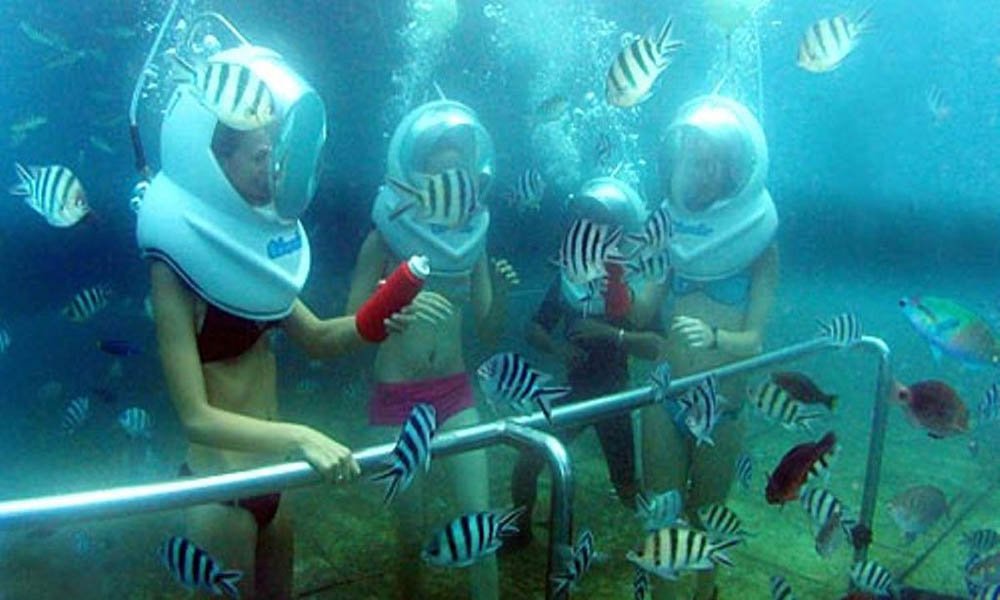
Is Bali Sea Walker Safe?
If you are planning water adventures in Bali for the first time, you may be wondering, Is Bali Sea Walker Safe? The activity looks unusual because participants walk along the seabed while wearing a large underwater helmet, surrounded by tropical fish and coral. Unlike scuba diving, you do not need to carry a conventional air tank on your back, and you do not have to swim continuously.
For many visitors, the experience is exciting precisely because it offers a chance to explore underwater without requiring extensive diving skills. However, like any activity involving the ocean, safety depends on several factors, including the operator, weather conditions, equipment, participant health, and how carefully instructions are followed.
Understanding how the activity works and what precautions matter most can help you decide whether it is appropriate for your Bali vacation.
How Does Bali Sea Walking Work?
Bali sea walker activity normally takes place in relatively shallow coastal water. Participants are fitted with a specialized helmet that provides an air supply while they walk underwater.
The helmet creates an air-filled space around your head, allowing you to breathe normally while looking around beneath the surface. An air hose connects the helmet to an external supply system.
Instead of swimming through the water, you generally walk along a prepared underwater path accompanied by trained staff or guides. The route and depth vary between operators and locations, so travelers should check the specific conditions before booking.
The experience is designed to be accessible to people who do not have scuba-diving certification. That accessibility is one of its biggest attractions.
However, easy access should never be interpreted as zero risk.
You are still entering the ocean, and conditions can change. Good operators therefore use safety briefings, appropriate equipment, trained personnel, and controlled activity areas to reduce potential problems.
Is Bali Sea Walker Safe for First-Time Participants?
For most healthy adults who meet the operator’s requirements, sea walking can be a manageable introduction to underwater activities.
One reason is that participants are not expected to master complicated diving techniques. You do not need to control a scuba regulator, manage your own tank, or learn underwater propulsion techniques.
Instead, the basic experience is relatively straightforward: enter the water, receive instructions, put on the helmet, descend to the activity area, and follow the guide.
The simplicity can make the experience less intimidating for people who are curious about underwater exploration but have never gone diving.
That said, first-time participants should take the safety briefing seriously. Do not assume that you already understand everything because the activity appears simple.
Listen to instructions about entering and exiting the water, hand signals, helmet use, communication, and what to do if you feel uncomfortable.
If something feels wrong, tell the guide immediately.
The Importance of the Underwater Helmet
The helmet is one of the most recognizable features of sea walking.
It is designed to provide an air space around the participant’s head while underwater. A connected air system supplies breathing air, allowing participants to remain beneath the surface without using a conventional scuba mouthpiece.
This design is convenient, but the helmet must be properly fitted and used according to the operator’s instructions.
Participants should never attempt to remove or manipulate the helmet underwater unless specifically instructed by trained personnel.
You should also understand how communication works before entering the water. Underwater communication may rely on hand signals or other methods because normal conversation is not possible in the same way as it is on land.
Knowing how to signal discomfort, request assistance, or indicate that you want to stop can make the experience considerably more comfortable.
What Are the Main Safety Risks?
Sea walking is generally conducted in controlled conditions, but several potential risks should still be considered.
Ocean Conditions
The sea is unpredictable.
Waves, currents, wind, visibility, and water movement can affect an underwater activity. Even when conditions look calm from the beach, underwater movement may be different.
A responsible operator should monitor conditions and determine whether the activity can proceed safely.
Travelers should not pressure an operator to continue if weather or sea conditions are unsuitable.
Equipment Problems
Any activity involving underwater breathing equipment depends on properly maintained equipment.
The helmet, air supply, hoses, connections, and other components should be inspected before use.
If you notice something unusual, such as an uncomfortable helmet fit or a problem with the air supply, inform the staff before proceeding.
Do not ignore a problem simply because other participants appear comfortable.
Slippery Surfaces
Walking underwater is different from walking on land.
The seabed may contain sand, rocks, coral fragments, or other uneven surfaces. Participants should move slowly and follow the designated route rather than wandering into unfamiliar areas.
Trying to walk quickly or stepping on coral can increase the possibility of losing balance or damaging the marine environment.
Panic or Anxiety
Feeling nervous underwater is completely understandable.
Some people may become uncomfortable when they first descend because the environment looks and feels different from anything they experience on land.
This is one reason the initial briefing is important.
If you are particularly anxious about enclosed equipment, deep water, or being underwater, tell the operator beforehand. It is better to discuss concerns before entering the water than to discover them halfway through the activity.
Is Sea Walking Safe for Non-Swimmers?
This is one of the most common questions from visitors.
Bali sea walker can be attractive to non-swimmers because the activity does not require continuous swimming. Participants normally walk on the seabed rather than swim independently across open water.
However, being a non-swimmer does not automatically mean that every sea walker activity is suitable for you.
You still need to be comfortable entering the water and following the operator’s instructions. Depending on the specific activity setup, participants may need to use boats, platforms, ladders, or other access points.
You should therefore tell the operator that you cannot swim when making a reservation.
Ask about the exact entry and exit procedures, the maximum depth, flotation support, supervision, and requirements for non-swimmers.
A responsible operator should be able to explain these details clearly.
Can Children Go Sea Walking?
Children may be able to participate in some sea walker experiences, but age and physical requirements vary.
There is no universal age rule that applies to every operator.
Factors may include the child’s height, weight, ability to follow instructions, comfort underwater, and the specific helmet or equipment being used.
Parents should never assume that an activity is appropriate simply because another family has participated.
Before booking, confirm the operator’s current minimum age and other requirements. If your child becomes frightened easily around water or does not understand basic instructions, another activity may be more appropriate.
For older children who are comfortable in the ocean, a supervised underwater walking experience can be memorable and educational.
Health Considerations Before Booking
Even though sea walking does not require scuba certification, participants should consider their general ability to safely take part in an ocean activity.
People with certain medical conditions may need professional medical advice before participating in underwater activities.
This can include conditions involving breathing, the heart, ears, sinuses, or other issues that could potentially be affected by pressure changes or physical exertion.
If you have an existing medical condition, are pregnant, have recently undergone surgery, or take medication that may affect your ability to participate safely, speak with a qualified medical professional and the activity provider before booking.
Do not hide relevant health information from the operator.
A few minutes of honest discussion can help prevent an uncomfortable or dangerous situation.
What Happens If You Feel Uncomfortable Underwater?
You should never feel embarrassed about stopping.
Some people discover that they love the underwater environment immediately. Others need more time to adjust to the helmet, pressure sensation, or unfamiliar surroundings.
If you feel anxious, dizzy, short of breath, or otherwise uncomfortable, communicate with the guide immediately.
The exact emergency and communication procedures vary between operators, which is another reason to pay attention during the briefing.
A professional guide should explain how participants can communicate underwater and how the group will return to the surface if necessary.
The safest approach is simple: do not try to tolerate serious discomfort silently.
Your guide cannot help with a problem they do not know about.
Choosing a Responsible Sea Walker Operator
The operator you choose can make a major difference to the quality and safety of your experience.
Before booking, look for clear information about:
- Safety procedures
- Equipment used
- Participant requirements
- Activity depth
- Weather cancellation policies
- Guide supervision
- Emergency procedures
- Pickup and transfer arrangements
- What is included in the package
Do not choose purely on price.
A very cheap activity may look attractive when comparing Bali experiences, but safety procedures, equipment maintenance, staffing, and customer support are more important than saving a small amount of money.
Recent traveler reviews can also provide useful information about how an operator actually conducts the experience. Look for consistent comments about organization, guides, equipment, communication, and overall professionalism rather than focusing only on star ratings.
Most importantly, make sure the information provided by the operator matches what you experience when you arrive.
What Should You Do Before Entering the Water?
A little preparation can make the activity much more comfortable.
Arrive early enough to listen to the briefing without feeling rushed.
Wear appropriate swimwear and follow the operator’s recommendations regarding footwear and personal belongings. Remove anything that could interfere with the equipment.
Before entering the water, make sure you understand how the helmet feels and how communication works.
Ask questions if you are uncertain.
For example, you can ask:
“How do I signal if I want to return to the surface?”
“What should I do if water enters the helmet?”
“Who should I follow underwater?”
“How deep will we go?”
“What happens if the weather changes?”
There is no such thing as a foolish safety question.
Knowing what to expect can significantly reduce anxiety, particularly for first-time participants.
Weather and Sea Conditions Matter
One of the biggest mistakes travelers make is assuming that an activity is safe simply because it was available yesterday.
Ocean conditions change.
Wind direction, waves, currents, rainfall, and visibility can affect the experience from one day to another.
A reputable operator should have the authority to postpone or cancel an activity when conditions are unsuitable.
This can be frustrating if you have planned your itinerary around a particular activity, but safety should come before convenience.
If your activity is postponed because of poor conditions, consider it a sign that the operator is taking the ocean seriously.
You should also avoid entering the water independently before or after the scheduled activity simply because conditions appear calm.
Respect the Marine Environment
Safety is not only about protecting participants.
It also means protecting the underwater environment.
Coral reefs are fragile ecosystems. Touching, standing on, or kicking coral can cause damage that may take years to recover.
During sea walking, stay on the designated route and follow the guide’s instructions.
Do not chase fish or attempt to grab marine animals.
Avoid throwing objects into the water or leaving anything behind.
Responsible behavior makes the experience better for everyone and helps preserve Bali’s underwater environment for future visitors.
Is Bali Sea Walker Safe Compared With Snorkeling?
When considering Is Bali Sea Walker Safe?, it is useful to compare it with snorkeling rather than treating either activity as completely risk-free.
Snorkeling requires participants to remain at the surface and usually involves swimming or floating. This means swimming ability and ocean conditions can have a significant effect on the experience.
Sea walking generally provides a more controlled route and allows participants to walk instead of continuously swimming. However, it introduces specialized underwater equipment and requires participants to follow the operator’s procedures carefully.
Neither activity should be considered universally safer for every traveler.
A confident swimmer may feel perfectly comfortable snorkeling but nervous wearing an underwater helmet. A non-swimmer may prefer the structured nature of sea walking.
The best choice is the one that matches your abilities and comfort level.
For a detailed comparison of the two experiences, read Bali Sea Walker vs Snorkeling to see how they differ in movement, equipment, comfort, and underwater exploration.
When Should You Avoid Sea Walking?
There are circumstances when postponing or avoiding the activity is the sensible choice.
You should reconsider participating if you are feeling unwell, extremely tired, intoxicated, or unable to follow safety instructions.
You should also discuss participation with the operator if you have medical concerns or are unsure whether your condition is compatible with underwater activities.
Poor weather or unsuitable ocean conditions are another obvious reason to postpone.
Finally, if an operator cannot clearly explain its safety procedures, equipment, participant requirements, or emergency arrangements, consider choosing another provider.
A memorable Bali adventure should leave you with good memories, not unnecessary risks.
So, is Bali sea walker safe? For suitable participants using properly maintained equipment under professional supervision and appropriate ocean conditions, it can be a controlled and enjoyable way to experience Bali underwater.
The key is not to think of the activity as completely risk-free. The ocean always deserves respect.
Choose a responsible operator, disclose relevant health concerns, listen carefully to the safety briefing, understand the communication signals, and never ignore discomfort.
You should also pay attention to weather and sea conditions rather than assuming that every scheduled activity will operate regardless of the environment.
For first-time visitors, sea walking can be an exciting alternative to traditional snorkeling or scuba diving. The experience allows you to observe tropical marine life from a unique perspective without requiring conventional scuba-diving skills.
Ultimately, the safest Bali underwater adventure is one that matches your abilities and is conducted with proper preparation and supervision.