

What Is a Bali Sea Walker Experience?
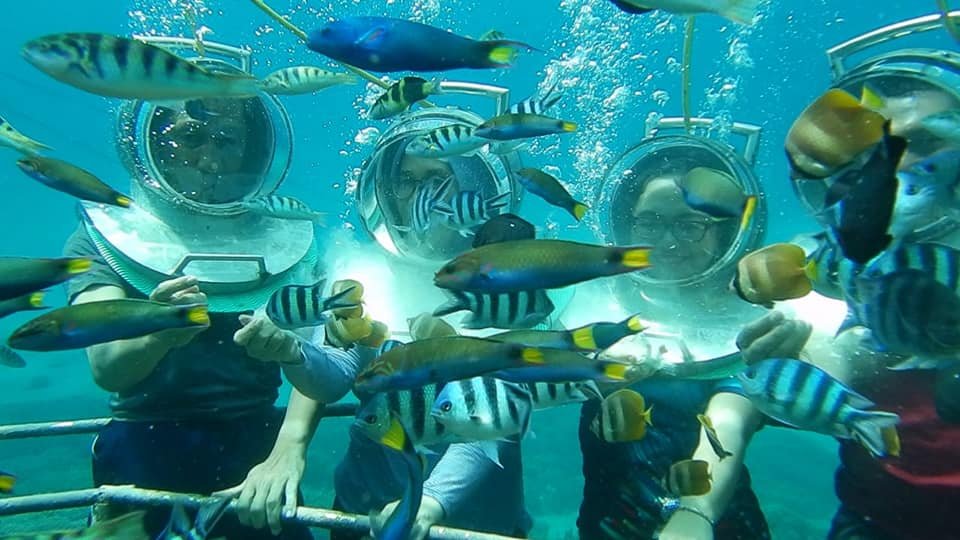
If you are wondering What Is a Bali Sea Walker Experience?, imagine walking along the ocean floor while colorful tropical fish swim around you, without needing to be an experienced diver. Sea walking is one of Bali’s most accessible underwater activities, offering visitors a chance to explore the marine environment while wearing a specially designed helmet that supplies air from above the surface.
Unlike scuba diving, you do not need to carry a heavy air tank on your back. Unlike snorkeling, you do not have to keep your face at the surface.
Instead, you descend to a controlled depth and walk along an underwater path while breathing normally through the helmet.
For travelers who want to see Bali beneath the waves but are not comfortable with traditional diving equipment, this can be an interesting middle ground.
What Exactly Is Sea Walking?
A Bali sea walker experience is an underwater activity where participants wear a transparent diving helmet connected to an air supply.
The helmet rests around the participant’s shoulders and allows normal breathing while underwater.
Once you are beneath the surface, you can walk slowly along a designated underwater route.
The experience is generally conducted with supervision from trained staff or guides.
You do not need to swim around independently because the activity takes place along a controlled route.
This is one reason sea walking appeals to first-time underwater explorers.
You can concentrate on looking at fish, coral, and the surrounding seascape rather than worrying about complicated diving techniques.
The experience is more like taking an underwater walk than learning to scuba dive.
How Does the Helmet Work?
The helmet is the feature that makes sea walking different from most other recreational water activities.
Instead of placing a small mouthpiece between your teeth, you wear a large helmet that surrounds your head.
Air is supplied through a connected system, allowing you to breathe while your head remains underwater.
Because the helmet contains air, your face remains relatively open inside it.
This can make the experience less intimidating for people who dislike traditional diving masks.
You can also see your surroundings without having to constantly manage a mask and snorkel.
The equipment may look unusual when you first see it, but the concept is relatively straightforward.
The crew will explain how to use it before you enter the water.
Do You Need to Know How to Swim?
One of the biggest attractions of sea walking is that swimming ability may not be as important as it is for snorkeling or diving.
However, this does not mean that everyone can automatically participate.
Operators may have their own age, health, weight, and physical requirements.
Participants should always provide accurate information about their swimming ability and any relevant physical limitations when asked.
The underwater route is controlled, and participants are normally accompanied or supervised.
Even so, the ocean is not a swimming pool.
You should feel comfortable following instructions and remaining calm in the water.
If you are extremely uncomfortable around water, speak with the operator before booking rather than assuming the activity will be suitable.
What Is a Bali Sea Walker Experience Like?
The experience usually begins at the beach or watersports center.
After registration and preparation, the staff explains the activity and demonstrates the equipment.
You may then be taken to the underwater starting point by boat, platform, or another arrangement depending on the location.
The helmet is placed over your head before or after entering the water, depending on the operator’s procedure.
Once you reach the designated underwater area, you gradually descend.
At first, the sensation can feel strange.
Your ears may notice pressure as you go deeper, and the appearance of the helmet around your head can take some getting used to.
After a short adjustment period, however, many people become focused on the underwater scenery.
Then the fun begins.
You walk slowly along the underwater route while fish move around you.
The Underwater Environment
The exact scenery depends on where the activity operates.
Some sea walking locations have artificial structures designed to attract marine life.
Others are positioned near coral environments or areas where tropical fish are commonly seen.
You may see schools of small tropical fish moving around the area.
Depending on the location and conditions, you might also encounter coral formations, underwater sculptures, or other features created specifically for visitors.
The experience is not necessarily about reaching a great depth.
Its attraction is being surrounded by the underwater environment without requiring advanced diving skills.
That makes it particularly interesting for travelers who want a first taste of Bali’s marine world.
Is Sea Walking the Same as Scuba Diving?
No.
Although both activities take place underwater, the experience and equipment are quite different.
Scuba diving requires participants to learn how to use a regulator, manage an air tank, control buoyancy, and communicate underwater using established signals.
Sea walking is considerably more straightforward for casual visitors.
You wear the helmet, follow the guide, and walk along the designated route.
You are also not expected to move freely through the water in the same way as a scuba diver.
This makes sea walking more accessible to people who want an water adventures underwater experience without taking a diving course.
However, scuba diving offers much greater freedom of movement and access to deeper or more extensive underwater environments.
Sea walking and scuba diving should therefore be viewed as different experiences rather than alternatives where one is universally better.
Sea Walking vs Snorkeling
Snorkeling is another popular way to explore Bali’s marine environment.
With snorkeling, you remain close to the surface and breathe through a snorkel.
It is inexpensive, simple, and allows you to cover a relatively large area.
Sea walking is different because you actually descend beneath the surface and walk along an underwater route.
For someone who enjoys swimming and feels comfortable in the ocean, snorkeling may provide greater freedom.
For someone who wants to stay upright and avoid constantly swimming, sea walking can be more appealing.
There is also a major visual difference.
When snorkeling, your face is in the water and your breathing is controlled through the snorkel.
With a sea walker helmet, your entire head is enclosed in the helmet while you breathe normally.
Is It Suitable for First-Time Visitors?
For many travelers, yes.
You do not need previous scuba diving experience to enjoy a sea walking session.
The crew provides instructions and helps participants understand the equipment before entering the water.
Still, first-timers should not rush.
Listen carefully during the briefing.
Ask questions if you do not understand something.
Pay attention to the descent procedure and follow the guide’s instructions.
Once underwater, move slowly.
There is no reason to rush along the route.
The whole point is to enjoy the environment around you.
What Does It Feel Like Underwater?
The first few moments can be unusual.
You may notice the pressure around your ears as you descend.
Your movements can also feel slightly different because of the water and the equipment.
The helmet itself may feel heavy above the water, but Bali sea walker underwater it is designed to allow participants to move more comfortably.
Once you become accustomed to the surroundings, the experience can become surprisingly peaceful.
The sound of the underwater environment is different from what you hear on land.
Fish move around you.
Bubbles rise through the water.
Light filters down from the surface.
For some visitors, this calm atmosphere becomes one of the most memorable parts of the activity.
What Should You Wear?
Swimwear is usually the most practical choice.
Wear something comfortable that you do not mind getting wet.
Avoid loose accessories such as necklaces, dangling earrings, or other items that could become lost or interfere with the equipment.
Remove valuable jewelry before entering the water.
If the operator provides specific instructions about clothing or footwear, follow those instructions.
A towel and change of clothes are also useful after the activity.
Remember that you may spend time in the sun before and after the underwater portion, so sun protection is important as well.
Can You Take Photos?
Photography policies vary between operators.
Some sea walker experiences offer professional photography or video as an optional service.
Others may allow personal waterproof cameras under certain conditions.
Do not assume you can bring your smartphone underwater.
A phone can easily become damaged or lost, and attempting to use it may distract you from the activity.
If photographs are important to you, ask about the available photo packages before entering the water.
A professional underwater photographer can often capture better images than trying to manage a camera while wearing a helmet.
How Deep Do You Go?
Sea walking generally takes place at a controlled depth rather than in deep open water.
The exact depth varies according to the operator and location.
The purpose is not to take participants into challenging diving conditions.
Instead, the activity is designed to provide an accessible underwater experience.
Depth is therefore only one part of the experience.
Even relatively shallow water can provide an interesting view of tropical marine life when you are actually standing beneath the surface.
If you are concerned about depth or underwater pressure, ask the operator about the specific route before booking.
What About Ear Pressure?
Changes in pressure can be noticeable during descent.
Some people experience discomfort in their ears when going underwater.
If you have difficulty equalizing pressure, do not ignore it.
Tell the guide.
Do not force yourself deeper simply because other participants are continuing.
A responsible operator should explain the descent procedure and provide appropriate guidance.
If you have a known medical issue involving your ears or sinuses, consult an appropriate medical professional before participating in underwater activities.
Is Sea Walking Safe?
For most healthy participants who meet the operator’s requirements and follow instructions, sea walking is designed as a supervised recreational activity.
However, no ocean activity is completely risk-free.
Conditions can change, equipment can malfunction, and individual reactions can vary.
This is why equipment checks, supervision, weather assessment, and clear instructions matter.
Never participate if you are impaired by alcohol or drugs.
Do not ignore instructions.
If you feel unwell or uncomfortable underwater, communicate with the guide immediately.
Your goal should be to enjoy the experience, not to prove that you can tolerate discomfort.
Who May Need to Avoid It?
Restrictions vary between operators.
Certain medical conditions may make underwater activities unsuitable.
Pregnant travelers, people with significant ear or sinus problems, individuals with certain heart or respiratory conditions, and people with other medical concerns may need specific medical advice before participating.
Age and weight restrictions may also apply.
Do not rely on a generic online description to determine whether an activity is appropriate for you.
Check the current requirements with the operator before making a booking.
If you are unsure because of a medical condition, ask your healthcare professional.
Why Tanjung Benoa Is Associated With Sea Walking
Tanjung Benoa is one of Bali’s best-known watersports areas.
Its location in southern Bali, concentration of watersports operators, and range of activities make it a popular choice for visitors looking for organized marine experiences.
Travelers staying around Nusa Dua and nearby southern Bali areas can often reach the activity area relatively easily.
One advantage is the variety of activities available nearby.
You can potentially combine sea walking with other watersports during the same trip, depending on your schedule and package.
This makes Tanjung Benoa particularly convenient for families and groups with different interests.
Can You Combine Sea Walking With Other Activities?
Yes, and this is one of the practical advantages of booking a watersports package.
You might combine sea walking with parasailing, jet skiing, or a banana boat ride.
However, avoid packing too many activities into a short period.
Each experience takes time for preparation, briefing, equipment changes, and transportation.
A relaxed schedule is usually more enjoyable than rushing from one activity to another.
If sea walking is your main reason for visiting, give yourself enough time to enjoy it rather than treating it as something to squeeze between several other activities.
What Should You Bring?
You do not need a large amount of equipment because the operator normally provides the specialized gear.
Bring practical personal items such as:
- Swimwear
- A towel
- Spare clothes
- Sunscreen
- Drinking water
- Waterproof storage for essentials
- Personal medication if needed
Leave expensive watches, jewelry, and unnecessary electronics behind.
If lockers are available, ask about the storage arrangements when you arrive.
How Long Does the Experience Take?
The underwater walking portion itself is usually only part of the overall experience.
You should allow additional time for transportation, registration, safety instructions, equipment preparation, entering the water, and returning to shore.
The exact duration varies between operators.
This is important when planning your Bali itinerary.
Do not schedule another activity immediately afterward if you have a long transfer or reservation elsewhere.
Give yourself some flexibility.
Is Sea Walking Good for Children?
It can be an interesting family activity, but suitability depends on the child’s age, size, confidence, and the operator’s rules.
Children need to be able to follow instructions and remain calm in an unfamiliar environment.
Parents should not assume that an activity suitable for one child will automatically be suitable for another.
Check the operator’s current age and physical requirements before booking.
If your child is nervous about the helmet or underwater environment, do not pressure them.
A vacation activity should be enjoyable rather than frightening.
What Happens If the Weather Changes?
Like other ocean activities, sea walking depends on weather and sea conditions.
An operator may change the schedule or postpone an activity when conditions are unsuitable.
This is normal for responsible watersports operations.
When planning your itinerary, avoid making your entire day dependent on a single weather-sensitive activity.
If your booking is affected by weather, check the operator’s cancellation or rescheduling policy.
It is better to have a flexible schedule than to expect the ocean to follow your travel plans.
Is Sea Walking Worth Trying?
For the right traveler, absolutely.
If you are curious about the underwater world but do not want to commit to scuba diving, sea walking provides an unusual introduction.
You can experience the sensation of being underwater while remaining on a controlled walking route.
It is also an excellent option for travelers who are interested in marine life but are not particularly confident swimmers.
The experience is different enough from snorkeling and diving that even travelers who have already tried other watersports may find it worthwhile.
So, What Is a Bali Sea Walker Experience?
It is a supervised underwater adventure that allows you to walk along the ocean floor while wearing a specialized air-supplied helmet.
You do not need to be a certified diver, and the experience is designed to make underwater exploration accessible to a broader range of visitors.
Instead of swimming around with a mask and snorkel or managing scuba equipment, you simply follow an underwater route while observing tropical fish and the surrounding marine environment.
Tanjung Benoa is particularly associated with organized sea walking and other watersports, making it a convenient option for travelers staying in southern Bali.
Before booking, check the operator’s current age, health, weight, and activity requirements. Confirm what equipment, transportation, photography, and other services are included.
Most importantly, listen to the safety briefing and communicate with the crew if anything feels uncomfortable.
For travelers looking for something different from a typical beach day, walking beneath Bali’s tropical waters can turn an ordinary vacation into a memorable underwater adventure.
If you are planning to combine sea walking with other activities, learn more about What Is Included in a Bali Watersport Package before choosing your package